8/25/14

Dean Young's "Romanticism 101" Partially-Explicated and Meditated Upon

This was intended to be an "Inspired by" day but life's tumultuous and it was pushed back, and now I've already posted today. So instead, read this and then my explication/one-sided conversation with it and maybe use it as a writing exercise sometime.

First: twice read the fantastic poem "Romanticism 101" by Dean Young which was just published in the July/August 2014 issue of Poetry. If you're not too versed in poetry (heh, and sorry), and the poem doesn't seem to make much sense, don't worry. It is a paratactic poem, so it lacks much of the connective tissue (or bridges) that traditional narrative provides you and requires you to leap along with it.

Even if you're not necessarily following anything but the individual lines/sections, take each one in as its own unit. This is a different way of reading than many are used to so please take a little longer reading the lines. They may be literal or metaphoric without notice given to the reader.

Once you've read it over, without looking back at the poem, think for a minute about things that stuck out to you in particular. Think back to words in particular. Give it a minute. There is a lot crammed into this short poem.

Then give it a second read over once you know what you're getting yourself into.

Maybe think of it like this. Imagine that you open your eyes and discover that you're standing mid-river in your Sunday best atop a couple of mossy rocks. Ahead of you is Dean, you're best bud, he's just looked back, and shouts "Come on!" then begins dashing along the scatter of rocks which pock the river's surface through the curling current. There's no bridge, there're no rocks behind you. You have no choice but to step on the rocks Dean was hopping to and keep as dry as you can, which isn't too dry. You make it to shore, blink, and as you open your eyes you hear the river, see Dean's mouth shape "Come on!" and have no choice but to try again. The second time the rocks' moss will be a little less slippery and I promise, you'll stay a little drier.

Once you've read it twice pop down to the last bit, or just bask in its goodness and move along with your day.


Daily Notebooking Writing Exercise August 25, 2014

August 25: Cereal day!


Cereal means many things to many people. To some, it means breakfast, to some it means a type of grass that produces both germ and bran. To some it's Frosted Flakes with a side of Tale Spin (I can pray to that altar), to some it's... whatever. If you've been born in the last 115 years or so, which I'd wager most people have been, there're corn flakes at very least. And while corn flakes may have been invented to disuade masturbation, they're also a way that humans have been beginning their days for a century, and other 'cereals' for longer.  Here are a couple ideas for ways to go with this prompt:

1) Nostalgia. There are dozens of ways to attack this. Whether rebelling against modern cereals (Fruity Cheerios, I'm looking at you) and embracing the cereals of your own experience (Here's the wiki page about Breakfast Cereals.)

2) History. Look at different sources and write about the history of cereal.

3) To be honest, while researching this prompt I recalled something about a guy who modified wheat to let it grow in more arid climates and (and saved a billion lives)... I got lost in the rabbit's hole of research. I think the first prompt should apply to most people. Even if it isn't your normal topic/level of discourse, try it. Put on your popular writing hat. I read recently in a review that Nick Lantz was like Billy Collins if he took his job more seriously. I don't know about all of that, I think moreso that Nick Lantz is following in Collins' path in the same way that Neil DeGrasse Tyson is following in the path of Carl Sagan. They're bringing the fine art to the public in a way that is both understandable and accessible. You've eaten a cereal out of a box, and you may've even watched cartoons afterwards. Meditate on that. It's not a full piece, but a vignette to maybe harvest from later. Don't harness yourself to the idea of needing a finished piece to even begin writing. This is to write without worry of purpose. This is to write. Go. Go.

8/19/14

Daily Notebooking Writing Exercise August 19, 2014

August 19: The Macguffin!

Watch this video animation from an interview with Alfred Hitchcock about the MacGuffin.

Write a short piece where the macguffin object is specifically addressed as being so important that it's not important why. This can be just a scene where many things like back story and character building are assumed to be fleshed out previously, a vignette where neither of those things are important, there can be a series of short lyric poems centered upon an object, or a person (or a part of a person). However you interpret it. Try to include a 'wounded' person. Someone not necessarily damaged goods, but with something in their past that at least in some ways, drives them.

8/18/14

Notebooking Daily Writing Exercise August 18, 2014

August 18: Narrative day!

Today work with one of the following possible scenarios.

1) A man's suit coat is hanging over your mailbox one morning. In the pocket is an envelope. In the envelope is...
2) A time traveler who had quickly become a king in the past by using his technology and knowledge has run out of ideas and is losing his grasp of power (and his popularity)...
3) Two semi-omniscient narrators trade notes about a particularly eventful (or uneventful--hence the meeting) day.
4) Tell the story of three strangers as told by a bus bench at the bus stop they frequent (at least one person should regularly visit the bench at a different time of day).
5) Tell the wandering conversations of a party without using any dialog tags, and very sparse description, (if any at all).
6) Write a six couplet poem (rhymed or unrhymed) where the first and fifth couplets are linked via an image, and the second, third and sixth all share reference to a color.

8/17/14

Notebooking Daily Writing Exercise August 17, 2014

August 17: Wordbank day!

Today will be brief, look through the lists of words provided in the following links and pick out ten or so. Spend a little time making sure you understand the correct usage of the words, if they have any fun history/uses/misuses/homophones etc. If there's a place with that name, or a person. Then write a few quick exercises utilizing that list.

Hazardous, infectious, opening, anticipate, dividend.

Now that you have your researched list, write the following exercises.

1) Write a phrase, line or sentence that uses three of the words from the wordbank.
2) Write two sentences that use one of the words as the last (or second to last) word.
3) Write two phrase, line or sentences that use one of the words as the first word.
4) Pick two candidates for most likely to be a character's name whether you mean this sarcastically as in a character in a poorly written book (like Anastasia Steel), or if you think you could actually make the name work.
5) In a three sentence story fragment describe a place and a person in that place, using one of the words from your wordbank in each sentence.
6) Expand one of your phrase/line/sentences into at least six units (phrase/line/sentence) that makes cohesive sense. Try to use a character with the wordbank name. If you're stuck where to go, maybe include a fork in the road.

8/12/14

Notebooking Daily Writing Exercise August 12, 2014

August 12: Moving Day!


Moving is always a stressful time, which is always great potential for writing. Today work with one of the following moving scenarios or one entirely of your own devising/experience.

1) Packing objects for a move, some items have more significance/memories than others.

2) The stress of moving logistics is putting you at wits end. Everything that can go wrong, has, and things that can't possibly, might.

3) Leaving behind a place of significance, whether it's a "good riddance to bad rubbish" or "parting is such sweet sorrow" sort of departure.

4) Arriving somewhere new! Whether it's more than you'd ever expected (at first) or it is nothing like the pictures. Perhaps a little both after a little honest time thinking about it in your new situation.

5) What was your most hectic move like? What do you remember most, miss most about the place. What is one room that specifically sticks out to you, and why? Any stories about bugs, or insects whether inside or outside of the house/apartment? What went wrong? What could have gone much worse?

8/11/14

Notebooking Daily Writing Exercise August 11, 2014

August 11: How to accomplish the impossible.

Today we'll attack the "How to" genre by trying to inform our readers on how to do something that would be considered impossible, whether it is actually impossible, or just perceived that way, or is a play on words (How to defy gravity as a fun vignette about singing along to the Wicked soundtrack perhaps?)


A few examples of impossible things: Counting to infinity, stealing Mount Rushmore (Carmen San Diego can show you how), shooting laser from your eyes, regrowing a severed arm, reverse time, unburning a photograph, holding your breath for an hour. Here are a bunch more.

Because the concept is somewhat absurd, don't worry if you get a little silly. The great thing about notebooking is that you're producing source material, not polished pieces, so don't worry that you might be going in the wrong direction, or putting the 'wrong' thing down. Anything can be the right thing in the right context.

8/10/14

Notebooking Daily Writing Exercise August 10, 2014

August 10: "Trapped in a small place with a daffodil."

This is a title exercise, with a bit of an open end. The quote is taken from a recent (episode 20, at 22:25) podcast by the brilliant QI elves called No Such Thing as a Fish.


Now listen to the podcast that I pulled the quote from, it's really funny and truly quite interesting. No Such Thing as a Dangerous Daffodil. When a fact strikes you as something you might use in a piece take note of it in your notebook.

Now write a piece from one of the two prompts (or for both if you can).

1) Title the piece "Trapped in a Small Place with a Daffodil" and figure out why that makes sense to the story. I like to look at the why first when I'm working from a title. Why is this daffodil so important, and so ominous that one might be trapped with it. Memory, anticipatory anxiety, symbology, and then there's always good old metaphor for the daffodil. Or is it hyperbole?

2) Take a fact you heard in the No Such Thing as a Fish podcast and find a way that that could be used metaphorically. If you can use more than one fact, go for it, there were many very unique or funny things that were linked. If you really want some constriction, use one fact/quote literally, and one as a metaphor.

8/9/14

Daily Notebooking Writing Exercise August 9, 2014

August 9: Fallen for animation.

OK, first, watch this animated short film. It's called "Fallen" by Sascha Geddart and Wolfram Kampffmeyer about, as Geddart says in the Vimeo page "A little meteor learns the biggest lesson of life on its way down to earth." It's under four minutes, so don't worry, it won't take all morning. Pay close attention to the character's facial expressions and the scenery especially.


Now we're going to take the general emotional beats from the film and use them as the character arc structure for the skeleton of our short story/poem today. What that means, is when the character in the film changes how he's reacting, that's also how your piece will change, within its own world. I'll give an example for, oh, how about general beats from the movie Stranger Than Fiction. Also, spoilers. If you haven't seen the movie, go do that, forget this exercise for now, you have more important things to do. Stranger Than Fiction is a great movie, just don't go into it expecting Night at the Roxbury or even Night at the Museum. It's directed by Marc Forster, who also directed Finding Neverland, Monster's Ball, and Kite Runner before this.

There are lots of ways to show emotions in your characters, here is a highly informative post by Katherine Cowley about using emotional beats in different ways, it is definitely worth a read: Writing Powerful Emotional Beats in Fiction.

First, search through character archetypes and pick three or four. One will be the main character, but for two of the character types pick three of the classic literary fears that they might react to.

Think of three very different settings where the image you have briefly sketched in your notebook can be out of place in. Then pick of a general plot archetype.

Now that you have the basics done, let us begin with the character arc.

1) The awakening. In the animation the meteorite character is awakened as it enters the atmosphere. It appears confused, exhilarated, curious. Your character is in a brand new place, a fish out of water perhaps. In Stranger Than Fiction (henceforth to be referred to as STF) this is when Harold first hears the narrator's voice. There is at first curiosity, then trepidation, which has softened back into a mild amusement by the time we hit the second beat.

2) The first scare. An unexpected problem arises and your character doubts him/herself and their handle on the situation. The core of the character is briefly questioned. This would be when Harold hears Dustin Hoffman's infamous "Little did he know" speech and what follows.


3) The plummet. Although the first scare didn't cause any real damage, it caused introspection and panic. The character suddenly has a great fear of the possible (or likely) changes that lay ahead and it makes them drastically change their lifestyle/decisions. In STF this might be when Harold is desperately trying to not progress his narrative by remaining in his apartment, all the way to finding the narrator, and speaking to Dustin Hoffman about the book.

4) The embrace. The character is falling, and they know it, but they also know that there is an inevitable that they can't change, whatever that may be. Maybe the story is about competing for a promotion at work and they finally accept that they will not receive it. This beat would come in STF after Harold reads the novel and loves it.

5) The Glorious Swan Dive. (I'm keeping that as a term I think.) Never flinching, your character accepts their fate not as a pawn of the immortals, but as one who enjoyed the ride, at least at the end. Harold Crick, well, you know how it ends if you've seen Stranger Than Fiction, and if you haven't, I thought I told you to go watch that first then come back, sheesh. Here, but beware this is a very NSFW website--ie porn ads, don't click the porn ads, they have spyware and whatnot. Be very careful if you procede. This is a putlocker link to watch Stranger Than Fiction streaming for free (that may be gone any day now).

6) A slight prologue. Don't end on the splashdown. As in the animation and STF, there's an aftermath to the glorious swan dive to experience that rounds out the story a little. A small consolation.

There you are. Your character has an awakening to something that is entirely new to them, has a scare, then becomes scared, then embraces at least some aspect of that which scared them, and goes out with a bang. Or do they go out entirely? Perhaps not. Not too bad a start to a story. Have at it.

8/8/14

Notebooking Daily Writing Exercise August 8, 2014

August 8: Killing the Pain.

Today we'll deal with the general theme of painkillers. This can be taken to mean painkillers as medicine, or as a metaphor for something which either end, or distracts from something physically or emotionally painful.

For instance, in the awesome Netflix Original show House of Cards Congresswoman Sharp uses the pain of getting tattoos to take her mind off the emotional pain that she bears because of her combat service.

So, research a little bit, start fleshing out an idea in your head whether meditating on painkillers, specific instances in your life or imagined experiences, a period piece dealing with historic painkillers like laudanum or trepanning, or any other iteration that might possibly come to mind.

If you need more direction for this writing exercise here are three possibilities:

1) You've just been stabbed. Whether in a robbery, by a needle left in the carpet, by a sibling rounding the kitchen corner way too quickly while brandishing a barbecue encrusted fork, whatever. You've been stabbed, and it hurts. A lot. Go.

2) A pain in your leg causes you to take perhaps a few too many pain pills. As you're about to drift off to sleep you notice that you can't feel your leg at all.

3) It is night. You're in pain. You're panicked. A neon sign is blinking. Tell your story in flashes. Short bursts of words. Quick sentences, an air of mystery. Go.

And here's Johnny Cash's version of Nine Inch Nail's "Hurt" just because.


8/7/14

Be Wary Citizens! Arcadia's August 15th chapbook contest deadlines (Fiction, Poetry) approach!


Arcadia Magazine's two chapbook contests are only eight days away!

The skinny:

What's the deadline? August 15, 2014.

What's it cost? $20.

How long should my chapbook be? For the Fiction Chapbook contest: 30-45 pages of fiction whether it's one novella, a series of linked stories or dozens of flash fiction pieces. For the Ruby Irene Poetry Chapbook contest: 15-35 pages of poetry.

What's unique? Arcadia's doing something a little unique with their chapbook series in that they've restructured their subscriptions. They call it moving to a quarterly publication, but really what they're doing is using the Fiction and Poetry Chapbook contest winners and printing them as the winter (poetry) / summer (fiction) issues as a stand-alone sent out to subscribers. This is actually really cool because it bumps up the number of people who will actually see/read the chapbooks.

What do they like? Luckily, they have some samples of past winners online. Here is a fiction sample from The Young Mormon's Guide to Not Having Sex in the 1980's by the awesomely named Ravsten Cottle. Here is a poem called "Last Night" from last year's winning poetry chapbook Driving Yourself to Jail in July by Nicole Santalucia.

Best of luck entering the contests!

Their regular submissions are also available year-round, for a $3 fee through Submittable.


Know Your Literary Journals: Lumina

Lumina is the literary magazine from the master's writing program Sarah Lawrence College. They've published a very eclectic group of authors including Brenda Hillman, Amy Hempel, Denise Duhamel, D. Nurske, Bill Knott, Matthea Harvey, Eamon Grennan and Rick Moody among others.

Mark your calendar for: October 1st (regular submission deadline) and October 15th (Poetry Contest deadline).
What it costs to submit: They have an interesting sliding scale. For a traditional 'the cost of postage' submission via submittable it is $3. For $5 you get your submission but also receive a back issue. I really like this option for writers who have never seen a magazine and are only going off things like acknowledgement pages in collections and pieces found online and attributed to the journal. Then they also have the $10 option which is a submission and a copy of the most recent issue which is great for writers who haven't seen the magazine in awhile or just happened to miss the latest issue.
What to submit: Three poems (up to 60 lines each) or two prose pieces (up to 5,000 words).
What they want: Luckily, they've posted a guide for poetry and for fiction just a couple weeks ago to help you get a feel for what would be right to send. Two quotes they thought were important for poetry with which I agree: from Mary Ruefle "a poem must rival a physical experience…” and T.S. Eliot “genuine poetry can communicate before it is understood.”

Read their full guidelines before submitting (it'd be a shame to accidentally include any personal information and disqualify yourself from their blind judging because you didn't check the full guidelines before clicking away), but you should definitely consider submitting, Lumina is a fine journal.

Notebooking Daily Writing Exercise August 7, 2014

August 7: Rhymebank Poem Writing!

Today it'll be similar to a regular wordbank day, but instead, pick five or so words from previous wordbank entries (if you are new to notebooking, browse past wordbank exercises and pick a few words from the links. Then use the wonderful resource Rhymezone and pick out at least five regular sounding rhymes for each of your words (remember to use near rhymes too). Once you have your bank of at least 25 words, write a few phrases. Because we're working with rhymes don't worry too much about writing complete sentences.

1) Write a phrase (2-8 words) for each of the words.
2) Pick your favorite three phrases and see if any of the rhyming word's phrases make sense (or might make sense in the right context/with tweaking). You should have three couplets. If any of the favorite phrases don't have a partner, feel free to write a new line/phrase to fit the pieces together.
3) From your three couplets, pick two which might work together in a way, with some additions and tweaking maybe, but there should be some sort of logic.
4) Write a short poem of two quatrains (2 groups of 4 lines) with the one of the original couplets as a part of each stanza.
5) If you can make all three couplets work in a 3 quatrain poem that's all the better. The point is to stretch your mind a little to find ways pieces can fit together in unexpected ways.

8/6/14

Notebooking Daily Writing Exercise August 6, 2014

August 6: Revisiting NPR's Wedding Cake in the Road.


Way back before these here internet days, the Spring of 1989, NPR's Weekend Edition Sunday began commissioning writers to respond to a writing prompt.

That prompt? The image of a wedding cake in the middle of the road. The stories were read on the show, and later anthologized (there are multiple copies at this link where you can buy the book for $0.01 plus standard shipping. I highly recommend it).

I especially liked Richard Bausch's Tandolfo the Great (you'll have to right click and rotate that pdf counterclockwise to avoid a neck cramp, but it's there at least).

So give it a shot. The image is that of a wedding cake in the middle of the road. How you get there is the adventure.


8/5/14

Notebooking Daily Writing Exercise August 5, 2014

August 5: Wordbank day!

Everyone's favorite is back! Spend a few minutes browsing the following links and write down ten or more words that stick out to you as being interesting or unique. Research each word briefly: check for interesting facts about its history, if there's a place, or a town with the same name, its connotations and differences from similar words. Anything interesting take a quick note of it in your notebook.

Tumble, cascade-feedback in a botany term glossary, end, fall, green. Now, go do your research, gumshoes!

Now for the actual neural stretching.

1) Make that wordbank (10 or more words with your notes about them). I've always been a fan of the word "Cusp" which is tucked into the "end" link.
2) Write three phrases, lines or sentences using one of the words from the list as the last word.
3) Write two full sentences that are only four words long and use one of the words from your wordbank.
4) Write two phrases, lines or sentences that use one of the words, and the name of a specific type of flower.
5) Rewrite two of your previous attempts with either fewer words, or more specific verbs, or both.
6) After the jump there are four images. Pick one and write a short piece inspired by it in some way. Use a couple of the words from your wordbank. Or say screw that, I got an idea for a piece doing the research for the wordbank and I'm going to write that.The idea is to get the wheels of your brain working in a literary way, so whatever you write is a win.

8/4/14

Notebooking Daily Writing Exercise August 4, 2014

August 4: "A Summer's Day"

Today's narrative exercises will be focused on something of a summer theme, and include music for those daring enough.

Pick one of the following narrative prompts (or multiple of them if you feel you can) and write a short piece somehow including or even just inspired by the prompt. If you start off with the idea and suddenly it takes a sharp turn left, but turns out good, why stop that? Whether you write a lyric Triolet, a nonfiction sketch or a series of vignettes each exactly 100 words, your form is your choice entirely.

As potential inspiration listen to these amazing pieces by Joe Hisaishi entitled "One Summer's Day" "Summer" and even though it's more for spring, the full  twenty minutes of "Hatsukoi" or First Love, just because it's my favorite.

1) An unexpected storm strikes in the middle of a sand castle building contest. Describe the destruction.
2) A game of baseball/soccer/fu/ootball is interrupted by an very unusual animal.
3) A lazy summer afternoon by a pond is embraced in all its serenity.
4) A game of tag has carried over into the evening, and when it's finally called, one (or more) are missing.
5) A backyard barbecue begins a string of events that ends with over fifty people dead. How?
6) A small airplane flies dangerously low over a small town... too dangerously low perhaps.
7) Include the following things: A glass of iced tea in the sunlight, a bee or wasp, a smell reminiscent of green,  and thunder.

8/2/14

Notebooking Daily Exercise August 2, 2014

August 2: Plums!

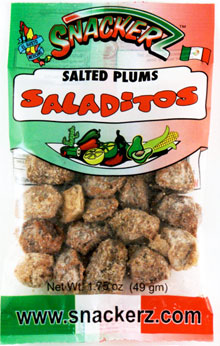
Today we'll focus on the fruit that is Plum. It's said to be one of the first foods cultivated by humans. Even two thousand years ago there were already 300 different varieties in Europe alone. It can be fermented into wine, eaten fresh, baked into pastries, dried and salted to make the snack saladitos

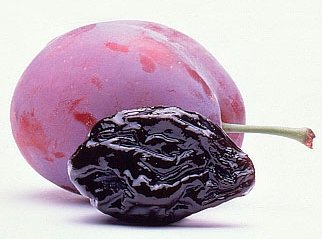
or even just dried to make prunes.

Do at least ten to twenty minutes of reading about plums. Follow links, research cultivation, the ways they're used, their history, everything you can. Take notes of interesting little bits in your notebook.

Once you're done with your research, look at other things that plum is related to (places, people--don't forget Professor Plum!). Notably plum can refer to a color (#8E4585) that was even picked as Sherwin-Williams' color of the year for 2014, whatever that means. But hey, maybe your rabbit hole of research will lead to a story about someone having a mental breakdown while deciding on paint colors, or maybe mine will now.

Now that you have notes, pick two or three of the most interesting bits and find a way those can be connected. Whether you decide to write a haiku about the swaying shadows of plums along the Caspian Sea in antiquity, an epic poem about a plum obsessed conqueror, a three act play about a plum-whino/philosopher contemplating life in the dark labyrinth that was ancient Rome at night, a toddler painting the walls of his playroom with Gerber plum baby food, whatever strikes you.

Just be sure to write it right away. Don't worry that it won't be good, it may not be, but it may smuggle an awesome paragraph out of you to be utilized later in a more thought-through piece. Remember, this notebook is to get you writing, not creating masterpieces in one go.

If you need added constraint, because I know some of you masochists out there do, try writing it in blank verse, or just with syllabic lines of ten (ten syllables per line). If you're writing it in prose, include at least four sentences that are just two words long (subject/verb).

8/1/14

Notebooking Daily Exercise August 1, 2014

August 1: Wordbank day.

I know everybody loves wordbank day, where we find a list of ten interesting and slightly unusual/not-everyday words, do a little research around the internet for any odd coincidences/fun facts about the words, and then do a short series of writing exercises which force you to use those words. I love the little rabbit-hole trails that you can end up tumbling down while doing your research. My favorite from doing these exercises got me from a word for a shade of purple to a webpage about the frequency of Finnish swearing when compared to other local countries.

Choose ten words from the following links: Elegant, Unattached, Destructive, Affix, Wasted.

1) Write two phrases, lines or sentences using two words from your list.
2) Write one phrase, line or sentence using three different words from your list.
3) Write a short narrative (20-300 words) that uses one of your wordbank words as the last word.
4) Write a three sentence vignette that uses the three words from #2, one in each short (5 words or fewer) sentence.

7/31/14

Notebooking Daily Exercise July 31, 2014

Vacation is over! It was a great trip. I spent a fair amount of time revisiting Isaac Asimov's Foundation Series, it was highly enjoyable, as you'd expect from the series that won the Hugo for Best All-Time Series against Lord of the Rings in the same year that Dune won best novel.

Today's exercise will be inspired by the style of Foundation's storytelling.

1) For a science fiction vignette find a title from this title generator (On my first batch, The Seventh Machinist stuck out to me right away as a possibility.)

2) Imagine a future world/universe for that title. Come up with at least one novel location, one extraordinary ability or technology, and examples of two types of conflict.

3) Write a summary for two plots involving the world. Don't get too detailed, describe at least one character for each in some detail (though not necessarily very fully, it could be all description of the character's voice if that is what you deem the most important thing about the character).

4) Pick one of the summaries and edit/excerpt a small portion (60-120 words) to read like a quote pulled from a future history book reporting on the incident. Be sure to include at least a short bit of the character description.

5) Flesh out that summary in a real-time story, with the character described as the main character. You decide if it's first or third person, the omniscience level of the narrator, all the fun stuff. Also, go read The Foundation Series. It's a little dry at first, and you have to understand that the sheer scope of the 1000 year timeline means you'll have multiple main characters over time, but it's well worth the read, and not all that long.

7/27/14

Daily Notebooking Exercise July 27, 2014

July 27: Wordbank Day!

Everyone loves wordbank day! Like finding the marble in the kiddie pool of oatmeal, we're all lucky today.

If you're new to wordbank day, there will be a few sources provided and you just pick ten of your favorite somewhat out of the ordinary options, write them down in your writer's notebook and we'll go from there.

The base: Blaze, Idea, Identical, Damper, Cut

Now that you have your 10+ words listed in your notebook, write a few phrases or sentences.

1) Write three sentences using two of the words from your bank.
2) Write a brief description of a person with one of your wordbank words as a first, last, or nickname.
3) Place the character from #2 in a setting but only describe the setting.
4) Use two unused words from your wordbank and write three sentences that are very different using both of them.
5) Expand upon exercises #2 and #3, explore a reason the person was in that setting, and why they may have to leave it quickly.

7/26/14

Notebooking Daily Exercise July 26, 2014

July 26: The Wayback Machine.

Today we'll look at the ghost of internet past. I have a feeling this one will be recurring.

Using the internet archive visit a website from your early internet browsing days. Whether you're browsing the IMDB or the CERN websites, or YTMND or DListed.

Using material from that source, form a piece.

If that is too open, include the image of a peeping tom. I got a strong whiff of "Beverly Home" from what I'm listening to: the really good podcast about Appalachian Poetry from the fantastic Poetry Foundation. I understand that there are hundreds of worthy causes in the world. Thousands and more. But I, personally, would like to endorse the Poetry Foundation as a cause worthy of your donation, should you be in a position to donate.

7/25/14

Notebooking Daily Exercise July 25, 2014

July 25: Mark Twain quote day.


Today you'll base a piece or a fragment of a piece from a quote. Whether you use it as an epigraph or within the piece, or even misquoted in either, is up to however the quotes strike you.

Here is the list of quotes. Read them then come back for the rest of the exercise after the jump.

7/24/14

Notebooking Daily Exercise: July 24, 2014

July 24: Narrative Day!

Today work with one of the following narrative threads and form a story or poem around it.

1) In the deep shadows where the trees grew close an evil lurked...
2) King of the hill for a plastic tiara
3) Begin with opening your eyes, and reveal (only very slowly) that you are moving backward in time as the piece continues.
4) Write a 400 word story about a mystery box (or room) using the word "the" no more than (3) times.

7/23/14

Daily Notebooking Exercise: July 23,2014

July 23: From A to Zagajewski

Today we'll look at the structure that Adam Zagajewski, an excellent Polish poet, used in his poem "Try to Praise the Mutilated World" and use that as a jumping off point for a piece of your own.

Begin the poem or flash fiction piece with the phrase "Try to praise _________". Like Zagajewski, be sure that the thing you are praising isn't something that would normally be praised. Praising a lover's beauty is, let's just say it's for a different poem.

After a few lines or sentences (potentially beginning the next sentence/line with "Remember") Begin a line/sentence with "You must praise _________".

After a few more descriptions that flesh out the odd thing you are praising, pull back from the 'must' and begin a line with "You should praise __________".

And finally, after a few more descriptions, pull it back to the simply prescriptive "Praise ________" followed by a somber close. Or a bombastic close if that's what you've got in ya, buddy.


(Alternately, if that structure isn't speaking to you, perhaps write a vignette about an empty room that was recently bustling with action.)

7/22/14

Notebooking Daily Exercise July 22, 2014

July 22: A Look Back.

If you've been notebooking along, today look back through your wordbanks and pick five words you hadn't earlier explored. If you're new to notebooking writing exercises, look through posts with the tag Wordbank and find five interesting words from the posts.

1) Write two sentences for each of the five words.
2) Write two sentences using two of the words.
3) Meditate on one of the words in particular, and write a story or poem fragment based on it.

7/21/14

Notebooking Daily Exercise July 21, 2014

July 21: Chipmunk Day!

Whether chipmunks make you think of this:
this:

this:

or even this:

they make you think of something. Even if it's as silly as this:


Today the writing exercise is to write a piece that deals with chipmunks. Whether you use their diet of seeds nuts, fruits, fungi (the image of Remi foraging for mushrooms springs to mind as a possible jumping off point from the movie Ratatouille) or their high metabolism, a metaphor about their tunneling or a lyric description of their fur pattern. Whatever you'd like.

Alternate writing exercise: You are a Buddhist monk just minding his own business eating a bag of chips when a gang approaches you and... (go!)

7/20/14

Notebooking Daily Exercise July 20, 2014

July 20: Narrative day!

Today we'll work with short narrative pieces based on one of the following prompts:

1) Walking to your car you notice something peculiar on the ground which is vastly more important than you first realize

2) Picking up recycling at a local park (good Samaritan that you are--or you're serving court-ordered community service) you find a human _______. Fill in the blank and go from there.

3) The lives of a 7-11 clerk, a third grader, and a bus driver all intersect, at least twice with all three in the same room/area.

4) An unemployed man becomes attached to ducks he feeds in the park. The color brown is important to this story, for some reason.

5) Write the tale of an accidental assassination.

6) If none of these scenarios strikes your fancy, look back through your wordbanks and pick out an additional word that you hadn't used, then write five sentences using it, including one with the word as the first word of the sentence, and two with it as the last word.

7/19/14

Notebooking Daily Exercise July 19, 2014

July 19: Calque day!

What's a calque you say? Essentially it's a linguistic term for a loan phrase from another language that is directly translated. Some of them sound a little off when you really look at the individual words, for instance, Flea Market come from the french term for "Market with fleas" which sounds a little less quaint for some reason.

Look at the various calques for skyscraper in other languages and pick one as the title for a piece. I like the Hindi "Sky Kisser" or Hebrew "Scraper of Skies" and especially the Finnish "Cloud Sketcher" for a title. Now write a short piece how you imagine the title to play out.

For added constriction include one or more of these items in your piece: a little girl with a spelling text book, a glow-in-the-dark globe, a purple rabbit's foot, an abacus, a broken ashtray, a collapsed mine shaft.

7/18/14

Paul Muldoon reads two poems with his pleasing Irish lilt


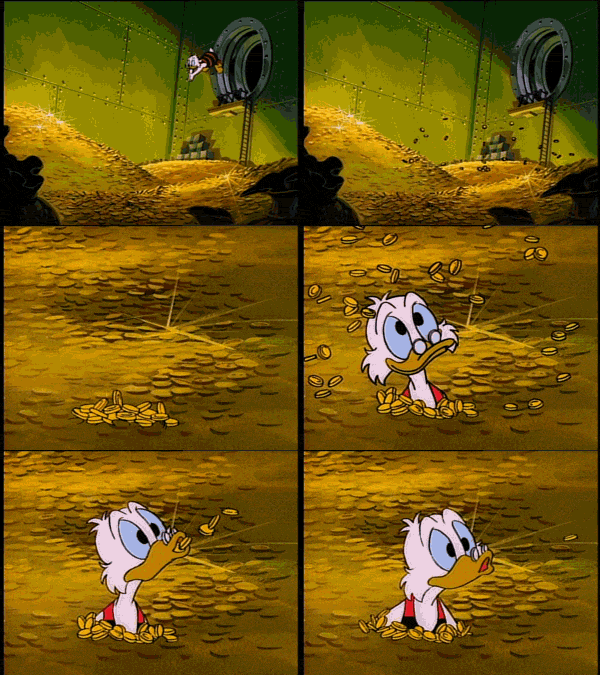
I had just decided that I needed to dive into a poet's collected works like Scrooge McDuck and wallow in the wealth of their words for a couple weeks, soak up its currency in large chunks of time dedicated to that poet's works alone. I needed someone writing the bulk of their work at least a few decades ago because I'd been reading mostly stuff from the 80's on for some time now, mostly even more recent.

Why? I don't know why. It sounded right to me. First thought, best thought and all.

Something from the 1900's as a loose guide. A number of poets came to mind (Roethke, Koch, Wright, Crane, Stevens, Bishop, Heaney, Ammons, Edson, Locklin--but I decided I wanted someone who's composing career was over, so Seamus Heaney and Gerald Locklin were out, for this project at least) and I started browsing some of their poems online to re-familiarize myself with them.

I'd recently been meditating on James Wright's "A Blessing" for another post that will up before too long, so he was one of the first I looked at, and of course I was immediately sidetracked.

Arguably one of Wright's most famous poems is "Lying in a Hammock at William Duffy's Farm in Pine Island, Minnesota" and in refreshing myself on that great poem I was struck by the last line "I have wasted my life" and its similarity to Rilke's "You must change your life" from "The Archaic Torso of Apollo".

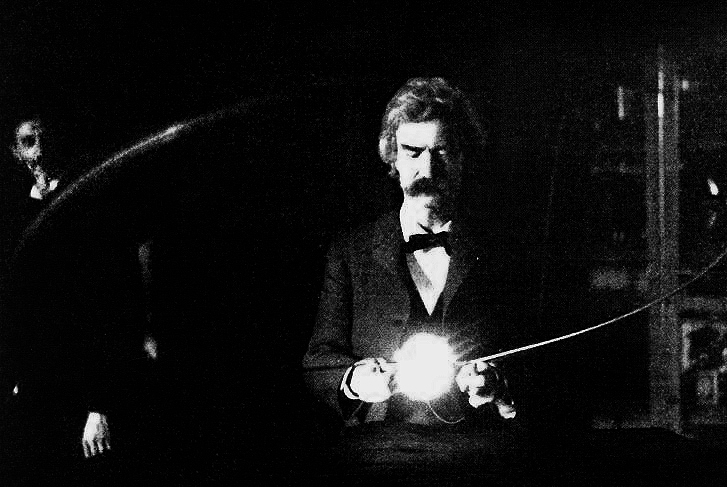
My first search to reinforce the idea that I'm not insane and that that comparison between two popular poems had to be there, found an excerpt of an essay by Alan Williamson from Modern American Poetry where he attributes the line to Rimbaud from the poem "Song of the Highest Tower" which is translated to "I have lost my life," and writes that A Poulin mistakenly attributes it to Rilke. Which, I don't know. I definitely can see it, but, anyway, further searching found this cool little recording of Paul Muldoon, The New Yorker's poetry guru and amazing poet reading Hammock and Apollo back to back. So it wasn't a wash, I wasn't alone.


Notebooking Daily Exercise July 18, 2014

July 18: Wordbank day!

Everyone loves wordbank day. Today we'll use a mix of synonyms and antonyms for: Pivot, Escalate, Progress, Betray, Harm. Pick ten words from the links for today's wordbank. As always, follow the rabbithole of internet researching for any unique choices so you fully know their context/homonyms/trivia about the chosen word.

1) Write three phrase/line/sentences that use one of the words.
2) Pick one of the words and describe a character who has that word as their first or last name.
3) Describe the sensation of speed using one of the words.
4) Using the character from #2 and the p/l/s from #3 write a short vignette/poem where the character is trying desperately to find a mundane object (bobby pin, toothpick, pen, toilet paper etc).

7/17/14

Notebooking Daily Exercise July 17, 2014

July 17: Picture yourself.

Today do a google search (not bing, we're looking for results here) for your first name followed by the word painting. Click to view all the images and look for an interesting picture. For more unusual names it may be a little easier to find an interesting painting. If you have a popular name like Jessica, you'll have a lot of portraits of people, but just scroll through and you will find something--for instance there's a couple interesting portraits of Jessica Rabbit from the classic Who Framed Roger Rabbit.

Write a piece which either:

a) you imagine yourself the subject/in the scene
b) imagine yourself as the artist obsessed with this particular piece
c) the painting appears briefly, but works as a metaphor, coming up at least twice in the story/poem
d) this painting is going to auction and for some reason, you have to have it, but why? How does the auction go?

7/16/14

Be Wary Citizens: Cincinnati Review contest deadline extended until July 22

There's really not too much to say other than that. Here is a link to the details about the contest, every $20 entry entitles you to a year subscription to The Cincinnati Review. Give it a whirl and get some great reading material delivered to your door for your troubles.

Notebooking Daily Exercise July 16, 2014

July 16: You've got a little Ekphrasis on your lip there.

Today we're going to look at a selection of photographs of unusual architecture by artist Filip Dujardin and imagine what it would be like to live or work in one of these buildings. For added fun, live in one and work in another.

Bonus exercise: In the link about Ekphrasis on poets.org the author discusses briefly W.H. Auden's poem "The Shield of Achilles" and describes a setting that will be the basis for a story or poem: "A plain without a feature, bare and brown, / No blade of grass, no sign of neighborhood, / Nothing to eat and nowhere to sit down" what happens is completely up to you.

7/15/14

Notebooking Daily Exercise July 15, 2014

July 15: Word Bank Day!

Everyone's favorite. Look through the links for the following words and build a list of ten not-quite-everyday sort of words. Definitely look up the words, do a google search for them, find any alternate meanings, histories, whatever might be an interesting rabbit hole. To use as a jumping off point use the following words: Gone, Fedora (also), Tropical, Niche, Machine, Darkness.

1) Write a phrase, line or sentence that uses three different words from your list in some way.
2) Write three (not necessarily connected) rhyming couplets using a word from your list as an end word for each couplet [ie: follow/hollow=(niche), hot=(tropical)/kumquat, vanished=(gone)/panicked]
3) Write a phrase, line or sentence that uses the same three words from #1 in the reverse order (ie if it was "within the hollow was oppressively hot as the cool breeze had vanished" the new one would be "the bullet vanished leaving a hot, burgundy hollow.")

If you've got the writing bug now and don't want to stop, take one of your couplets and expand it into a 300 word flash fiction. For added fun, somehow include a man wearing a hat.

7/14/14

Notebooking Daily Exercise July 14, 2014

July 14: Tuba day!

The tuba isn't your everyday item. There are images that come to mind when you think of the word Tuba a few images spring to mind (aside from just the image and the deep tooting sound):
or maybe:
or:
maybe even:

Whatever tuba makes you think of, go with it. Possible options would be writing about or from the perspective of a tuba player, a meditation on the sound of the tuba (and perhaps how it came to be that you are hearing the tuba in the first place), or even a vignette about the item that is a tuba with it's curves, colors, shine, etc. Whatever the tuba makes you think of. Here are a couple tuba songs to get you in the mood: The Super Mario Brother's Theme Song, Sonic Boom (kinda loud), El Troquero Locochon,  and, well, it kinda sounds like a tuba sampled in The Chicharones' Bring Out the Clowns.

If you want to set other limitations for yourself you could:
a) begin and end with the tuba
b) never use the actual word tuba
c) write it in a series of  eight sentences that fluctuate how many words are in them: Sentence 1=7 words, S2=4 words, S3=12 words, S4=9 words, S5=10 words, S6=2 words, S7=7 words, S8=2 words.

Best of luck notebookers!

7/13/14

Notebooking Daily Exercise July 13, 2014

July 13: Wordbank day!

Today we'll look at synonyms for some commonplace words that we might use to spice up everyday situations (which sounds like a cover story on Cosmo).

1) Find ten or more words that are interesting or that stick out to you from these links:

Suggest
Think
Attend
Sticky 
Dark

As always, explore a bit, do research on unique words so you have a better feel for their actual usage and connotations before you use the word. And also, as always, explore any rabbit holes that may lay in wait as you are doing your research. From a synonym for purple through a link related to the word I landed on a wiki page about the fondness that Finns have for swearing (perse apparently also means ass in Finnish), and I'm definitely going to use that little bit of information in a poem someday.

2) Pick three of those words and write a sentence with them.
3) Write a few phrases/lines/sentences with two words back to back (for example: "Unabashed by frequent offers" for frequent/attend and offers/suggest. This should help you think more about homonyms, as they're fun to work into your writing, and can add everything from foreshadowing to humor.
4) Take your three words from exercise #2, and write a sentence with them used in the reverse order (yes, 2 will be in the exact same spot, but such is life, comrade).

7/12/14

Notebooking Daily Exercise July 12, 2014

July 12:

Trivia day! Today we'll look at a short list of interesting facts posted around Thanksgiving time last year on The Huffington Post. Things like "The word 'time' is the most commonly used noun in English" or "An 'earworm' is a song that gets stuck in your head." Also check out this list from Ebaum's World (Yes, Yiddish Cup and all)

1) Write down at least four of the facts.

2) Pick one of the facts and research the topic for a couple minutes. Think of parallels with other things (for instance, on the Ebaum's World site one of the facts is that 1998 is as far away as 2030. This is similar to the fact that in the spectrum of time, we are closer to the life of cleopatra, than she was while living to the people who build the Great Pyramid of Giza.

3) Write a few fragments about different things you learned/knew about the topic you researched. If one aspect doesn't organically link to another just make them separate snippets.

4) Repeat as often as you can.

7/11/14

Notebooking Daily Exercise July 11, 2014

July 11:

Narrative exercise day! Today we'll deal with one of three scenarios in some way.

1) You're printing something important and your printer's ink has just started going out.
2) Lighting off fireworks on the Fourth of July, one begins wobbling when the person lighting it runs away, and it tips over (pointing at the narrator, or others) just before shooting off.
3) Crossing a bridge, you see a person standing on the railing about to jump.

Pick one of those scenarios and do with it what you will, whether you just drive by the person about to jump and never see if they did or not, the firework shoots into a crowd and there's horrible viscera, or a half-dozen obstacles keep you from getting your item printed, and you end up in the most dysfunctional Kinkos ever (the bluest of the blues).

7/10/14

Notebooking Daily Exercise July 10, 2014

July 10: Narrative day!

Pick one of the following narrative threads and expand on it as you like, whether you end at the prompt, begin there, mesh more than one together, stick to a lyric interpretation, write a series of  tweet-length rhyming rants about the valuelessness of said prompts, whatever gets the words flowing.

1) Begin a story en media res about someone who just robbed a store and discovered there was under $10 in the till.

2) An ant battles the elements while the narrator battles an internal demon in this dichotomic tale.

3) The air is hot and dry in the strange room that you wake up in. On the bedside table is a Houston Times newspaper. The last thing you remember is paying for a Big Gulp in your hometown in Nebraska. Go from there.

4) As spring melts the snow around a quiet Alaskan town, it uncovers a number of unexplained body parts.

5) Return to a childhood memory with a cynical version of the Ghost of Christmas Past (potentially a now-dead celebrity like George Carlin, Billie Holiday, or really out of character--Mr. Rogers).

6) Meditate on the color green. Come up with a number of things which are green, and pick a couple of the most disparate items, then form a story/poem that meshes those two things (this isn't really narrative, but I figured I'd throw you lyric poets a bone).

7/9/14

Know Your Literary Journals: Chaffin Journal


The Chaffin Journal is the literary review of Eastern Kentucky University. Perfect bound with a glossy cover (not like, crazy slick, but not super matte or desktop printed). Here is an example of poetry they've chosen to describe their poetry aesthetic. Here is their example for fiction. It's relatively slim, but has recently been a little longer and is definitely quality. They have graciously kept their cover price low, $6 for a 1 issue (yearly) subscription or $5 for a back issue. And they also have a slightly odd submission period: June 1st through October 1st. So, right now. They also don't accept online submissions, so dust off your printer.

Guidelines for poetry: submit 3-5 poems at a time. For fiction: stories must be 10,000 or fewer words.

(editor's note) We are open to all forms, subjects, schools, and styles. Excellence is our only criteria.

Send all submissions to:

The Chaffin Journal
Robert W. Witt, editor
Department of English
467 Case Annex
Eastern Kentucky University
Richmond, KY 40475

Definitely read the samples and check out the full guidelines at their website, but also, if it looks like your writing will mesh with the editorial aesthetic, this is a really good little magazine to submit/subscribe to.

Be Wary Citizens! The Cincinnati Review's contest deadline approaches.


Deadline Date: July 15 (next tuesday).
Submission Process: Only online here.
Money Situation: $20 to enter, $1000 prize for  two categories: one poem and one piece of fiction.
Consolation Prize: A one year subscription to the Cincinnati Review for each entry.
Judging: Anonymous (as in, not even a name in the file name or you're disqualified), by the editors.
What you can submit: Up to 8 pages of poems (whether that's one or 8 poems) or 40 pages of prose (one story/excerpt, or up to ten pieces of flash fiction if they are thematically linked).

The Skinny:
The Robert and Adele Schiff Prose and Poetry Awards are offered by The Cincinnati Review every year, like many other reputable journals, this once a year event helps draw attention to the magazine, as well as both quality work and much needed funding (I'm only extrapolating, The Cincinnati Review could be rolling in donor cash for all I know). Some journals are now getting a little bit of that sweet, sweet Submittable change to offset overhead too, but that's for another day. Be sure to visit the contest page.

Why you should enter:
The Cincinnati Review is a very nice journal. Fine quality printing, good editorial selections, and from the few issues I've seen of it, the choices are relatively eclectic. You'll find both lyric and narrative poems, flash fiction and long stories. David Kirby, Carl Dennis and David Wagoner are all in last winter's issue if that helps to slightly describe at least that issue's aesthetic. Here is what the editor says they look for in a submission.

Really though, why is it worth your $20:
Well, I mean, don't neglect your bills or children or anything, but if it's between eating something at home one night instead of getting Panera Bread or Chili's or maybe cutting out one daily purchase a couple times a week, having one fewer drink at the bar twice, yeah, if you have pieces you're confident, or even mostly confident in, this is definitely worth it. Not only do you toss your lot in the ring for a possible windfall of $1,000, but every piece submitted is considered for publication (The Cincinnati Review pays $30 per page of poetry, and $25 per page of prose, not too shabby for a literary magazine). In addition to that, you get a year's subscription, and if you want to enter multiple times, each additional group of poems or story can either extend your The Cincinnati Review subscription or can be given as a gift to a friend (I've always liked that idea, a gift subscription to a literary magazine with no warning--what a pleasant surprise).

Notebooking Daily Exercise July 9, 2014

July 9: Rhymebank time!

Today we'll be building our wordbank not based on the thesaurus but with a rhymebank. I have a little system I like to use, where I write the alphabet very small in the top corner of the paper and then use that as I'm going through trying to think of rhymes. I feel that testing your vocabulary by thinking of rhyming words before addressing the rhyming dictionary is important, because it not only does it remind you of little used words that you had heard a few times, it reminds you of familiar words which are just not the average word choice for normal speech.

1) Look back through your previous wordbanks and pick out a three to five words. If you're just starting the wordbank, look through the past wordbank labelled posts and browse the linked thesaurus pages to find the 3-5 interesting words.

2) Try to think of all the words that rhyme with each word. Remember, as you're going alphabetically through, to include consonant blends such as cl, str, and th among others. Slant or near rhymes are good too. Once you've exhausted your known words, add a couple more to your list from a rhyming dictionary. Don't write everything, but when you find a new word you like, be sure to look it up and learn it well.

3) If you have time, read the poem "Teaching Slant Rhyme" by from Rattle #35 by Leah Nielson because it's a good poem, accessible, and it is very important to the writing process that you are also reading, specifically reading contemporary works, but reading any literature will do the trick of keeping your mind on words.

7/8/14

Notebooking Daily Exercise July 8, 2014

July 8:

Random name generator day! Today's exercise utilize Cornelius Zappencackler's Derange-o-Lab Pulp Sci-Fi Title-o-Tron to find a number of unusual combinations of words. They don't necessarily have to be used as a title, or in their entirety (some can be long) but write down at least ten word combinations. Reset your plate as many times as you need to get to ten. For instance, on my first plate I got "Unknowable Talons" which could be a piece imagining the life (perhaps via impossible hyperbole) of a bird of prey, "Captives of the Unfortunate Blossoms" which made me think of the struggle an insect might feel while in the jaws of a venus fly trap, and "The Waitress of Fate's Accordion" which sounds like a forlorn love/love lost lyric poem.

1) Use one of those ten or more titles either in or as the title for a fragment of writing.

2) Use more than one of the titles within the space a few lines/sentences.

7/7/14

Notebooking Daily Exercise July 7, 2014

July 7:

Zigzag is, in my opinion a great word. First of all, two non-sequential Z's. But also add to our word bank zigzag's synonyms: jagged, oblique, diagonal, serrated, snaking, undulating.

Now take a look at Scott Kreeger's amazing short story "Zigzag. Yeah." which was published in the New Ohio Review, a really quality literary magazine that prints accessible yet thoughtful writing. After you read the story click on the jump for today's exercise.


7/6/14

Notebooking Daily Exercise July 6, 2014

July 6:

Wordbank day! Having a good reservoir of unique words that you're familiar with is very helpful when you're looking for something to spark your brain along some creative path. Today look through synonyms (and antonyms) for: shudder, slide, anchor, and enhance.

1) Pick out at least ten words from those lists, if any of the words which attract you are unfamiliar, again, please do familiarize yourself with its exact meaning in the dictionary, and wikipedia for a better idea of it being used in context.

For instance I liked glissade, a synonym for slide, and found out that it's actually both a ballet gliding move, and a method for descending steep snowy slopes, usually on your buttocks, and that there are multiple varieties of the buttock slide.

2) Write at least three phrases/lines/sentences using words from your word bank.

3) Use at least one of the words in a sentence that is six words or fewer for each of the following words (which will also be included in the sentence, whether you include the two prescribed words in the count or not is up to you): Atop, Before, Denied, Plastic.

7/5/14

Notebooking Daily Exercise July 5, 2014

July 5:

Today we'll look at artwork by an amazing artist couple Robert and Shana ParkeHarrison. They have a large body of work and it is tremendous stuff. Fine art darkroom manipulation as opposed to photoshop wizardry, these artists make work which place the human subject in a surreal landscape, or as Robert himself put it:
"My photographs tell stories of loss, human struggle, and personal exploration within landscapes scarred by technology and over-use"
Pick a photo or series of photos and either imagine a narrative inspired by the artwork/s, or write what you imagine to be on the mind of the human in the photograph/s.

7/4/14

Notebooking Daily Exercise July 4, 2014

July 4:

Happy Fourth of July! Today think about Americana, the good the bad the fun the disgusting. Pick a few things that you associate with America and either recall an experience you had with it, or imagine one. If you're imagining something, make it something wild or at least unexpected. A few examples of Americana would be:

Hot Dogs, Apple Pie, G.I. Joes, Barbie Dolls, McDonald's, songs like "Born in the USA" or "The Star Spangled Banner", the Statue of Liberty, One of the six places in America that lay claim to Paul Bunyan, Disneyland, Mark Twain, pick-up-trucks, Crayola crayons...

Option #2:

If you're not too familiar with Americana or just don't feel like writing about it, another option would be to write about fireworks. Whether describing them as an official celebration, a chemical reaction, something teenagers take to the woods to blow up, however you want to interpret it.

7/3/14

Notebooking Daily Exercise July 3, 2014

July 3:

Wordbank day! Today we'll be looking specifically at action words.

1) Get at least 10-20 words from some of your favorite action's synonyms, try grab, smack, lift, push, yank, spin and catch as a basis if you can't think of any others. We're looking for words that aren't absurd necessarily, not archaic ones, just slightly more unusual than said words.

2) Write a phrase/line/sentence for at least five of the words.

3) Write at least three phrase/line/sentences using more than one of the words.

4) Take two or three of the previous P/L/S you've written and turn them into American Sentences. An American Sentence is a 17 syllable sentence unit developed by Allen Ginsberg as an American alternative to the Japanese form Haiku. Sometimes very imagistic, sometimes very enigmatic, sometimes merely whispers of moments which indicate larger bearing or longer stories. I've always been partial to Joe Schreiber's great American Sentence Progress:

After Seventeen days she finally broke down and called him "Daddy."

as well as Allen Ginsburg's Tompkins Square Lower East Side N.Y.

Four skinheads stand in the streetlight chatting under an umbrella.


7/2/14

Notebooking Daily Exercise July 2, 2014

July 2:

Today we'll look at a short poem by William Carlos Williams called "The Hurricane". Don't feel like you have to write poetry here, any sort of response is just dandy.

The Hurricane"
      by William Carlos Williams

The tree lay down
on the garage roof
and stretched, You
have your heaven,
it said, go to it.

Williams is a notoriously imagistic poet, so it is largely up for interpretation, though poetry critic Stephen Burt did say of this gem:

"Isn’t this tiny poem (among other things) a snapshot of Williams’s suburbs, an emblem for secularists, and a demonstration of how it sounds (curt, confident) to take disaster in one’s stride?"

What you will fix upon for today's notebooking exercise is the concept of an inanimate object dialogue. In this poem the fallen tree speaks to the garage (or, perhaps specifically its roof) after being knocked over by a hurricane. There are many different ways you can riff on this: Another storm-based interaction whether it's a flash flood or a tornado or a blizzard or an earthquake; an interaction that bears the stoicism of inanimate objects not in control of their movements; a rivalry between similar (or dissimilar objects); or however you choose to have your two inanimate objects interact.

7/1/14

Notebooking Daily Exercise July 1, 2014

July 1:

Today we'll build a small wordbank of interesting color words first, then exercise briefly.

1) Go to the thesaurus and find at least ten slightly (or quite) unusual or interesting words from the lists for: Red, Brown, and Purple.

2) Write ten phrases, lines or sentences utilizing at least one word.

3) Write three phrases, lines or sentences using two or more of the words.

4) Pick your favorite of those three and build a few lines around that one which work thematically or narratively.