6/16/20

2020 Writing Exercise Series #166: Between a Fact and an Exact Place 13


The Notebooking Daily 2020 Writing Series is a daily writing exercises for both prose writers and poets to keep your creative mind stretched and ready to go—fresh for your other writing endeavors. The writing prompts take the impetus—that initial crystal of creation—out of your hands (for the most part) and changes your writing creation into creative problem solving. Instead of being preoccupied with the question "What do I write" you are instead pondering "How do I make this work?" And in the process you are producing new writing.


These exercises are not meant to be a standard writing session. They are meant to be productive and to keep your brain thinking about using language to solve simple or complex problems. The worst thing you can do is sit there inactive. It's like taking a 5 minute breather in the middle of a spin class—the point is to push, to produce something, however imperfect. If you don't overthink them, you will be able to complete all of the exercises in under 30 minutes.
#166
Between a Fact and an Exact Place 13
For today's writing exercise you will write a piece of poetry or prose which contains the following place (either as the setting, referenced or some aspect of it described) and the following fact in some way (its discovery, used as a metaphor, witnessed etc).

Fact: A rainbow will always be opposite the sun.


As an additional assignment, should you choose to incorporate it, is as follows: Also include the words "Granular" "Frumpy" "Sallow" "Group" and "Veered".
------------------------------------


If you'd like some background music to write to, try this "Staying In" lofi mix from our friends at The Jazz Hop Cafe.


6/15/20

2020 Writing Exercise Series #165: 3x5x7 Wordbank Sprints 23


The Notebooking Daily 2020 Writing Series is a daily writing exercises for both prose writers and poets to keep your creative mind stretched and ready to go—fresh for your other writing endeavors. The writing prompts take the impetus—that initial crystal of creation—out of your hands (for the most part) and changes your writing creation into creative problem solving. Instead of being preoccupied with the question "What do I write" you are instead pondering "How do I make this work?" And in the process you are producing new writing.

These exercises are not meant to be a standard writing session. They are meant to be productive and to keep your brain thinking about using language to solve simple or complex problems. The worst thing you can do is sit there inactive. It's like taking a 5 minute breather in the middle of a spin class—the point is to push, to produce something, however imperfect. If you don't overthink them, you will be able to complete all of the exercises in under 30 minutes.

#165
3x5x7 Wordbank Sprints 23
For today's writing exercise complete the following steps. The wordbank exercise has changed so be sure to take a peek at the new 'rules'. I recommend using the timer on your phone or computer and setting it for 1 minute. Each time you write a sentence, quickly reset the timer. If it goes off before you're finished with the sentence—wrap it up ASAP!

In order to complete the large number of sentences demanded of this exercise it is imperative that you write fast. Don't think too much at all until you've reached the final exercise. The process of this quick production is to thrust past second guesses or other stumbling blocks that sometimes impede your writing. You're aiming to write 23 sentences in at most 20 minutes so you have ten minutes to organize and write that actual piece, so you're going to be writing more than a sentence a minute.

WRITE FAST, DON'T OVERTHINK


  1. Pick one word from each of three groups and write a sentence that includes all of the words, feel free to change tense, pluralize, gerund etc. Repeat the process five (5) times using different combinations. No dawdling! 
  2. Now write three (3) sentences that are six (6) words or fewer in length that use any two (2) words from the wordbanks.
  3. Now write three (3) sentences that use four (4) or more of the words.
  4. Now write five (5) sentences which begin with one (1) of the words and contain a second one (1) of the words.
  5. Now write five (5) sentences which are fewer than ten (10) words in length and conclude with one (1) of the words from the wordbanks. Remember, keep up the pace! Don't overthink!
  6. Now rephrase two (2) of your sentences from exercise #1 in either a more efficient or more descriptive manner.
  7. Now write a piece of fiction or poetry that uses at least three (3) of the sentences you've written throughout this process of exercises. Try to use as many of the (good) sentences as you can, or parts of the sentences if the whole thing doesn't fit or works better altered.


Word Bank 1:
  • Decode
  • Droop
  • Filet
  • Knot
  • Triumph
Wordbank 2:
  • Dropped
  • Briar
  • Prior
  • Moron
  • Stoic

Wordbank 3
:
  • Jail
  • Swerve
  • Brag
  • Orange
  • Chord

Bonus writing exercise: In your piece, include salt, and you must include two sentences that are one or two words long.

------------------------------------

Want some unobtrusive background writing music? Try this "Happy 2 C U" lofi playlist.


6/14/20

2020 Writing Exercise Series #164: Title Mania Plus 26


The Notebooking Daily 2020 Writing Series is here! These are daily writing exercises for both prose writers and poets to keep your creative mind stretched and ready to go—fresh for your other writing endeavors. The writing prompts take the impetus—that initial crystal of creation—out of your hands (for the most part) and changes your writing creation into creative problem solving. Instead of being preoccupied with the question "What do I write" you are instead pondering "How do I make this work?" And in the process you are producing new writing.

These exercises are not meant to be a standard writing session. They are meant to be productive and to keep your brain thinking about using language to solve simple or complex problems. The worst thing you can do is sit there inactive. It's like taking a 5 minute breather in the middle of a spin class—the point is to push, to produce something, however imperfect. If you don't overthink them, you will be able to complete all of the exercises in under 30 minutes.
#164
Title Mania Plus  26

For today's writing exercise you will write a piece of poetry or prose which uses one of the following as its title. Before you write, first read the poem from which the titles are selected. For a bonus challenge use the additional exercise of five random constraints.

Today's titles are random. No poem.

Titles:
  1. Feed the Child
  2. Within Shouting Distance
  3. Dropped
  4. As the Streetlights Buzz Signaled Their Awakening
  5. Upwards in the Darkness
  6. Shark Cage

Bonus Exercise: Three Things
(Your piece must also include the following three 'things')
  1. A Torn Screen Door
  2. A Cinder Block
  3. A Snail
------------------------------------

If you'd like some background music to write to, try this "Bus Station" lofi mix.


2020 Writing Exercise Series #163: Beginning & Ending with a Break 21


The Notebooking Daily 2020 Writing Series is a daily writing exercises for both prose writers and poets to keep your creative mind stretched and ready to go—fresh for your other writing endeavors. The writing prompts take the impetus—that initial crystal of creation—out of your hands (for the most part) and changes your writing creation into creative problem solving. Instead of being preoccupied with the question "What do I write" you are instead pondering "How do I make this work?" And in the process you are producing new writing.

These exercises are not meant to be a standard writing session. They are meant to be productive and to keep your brain thinking about using language to solve simple or complex problems. The worst thing you can do is sit there inactive. It's like taking a 5 minute breather in the middle of a spin class—the point is to push, to produce something, however imperfect. If you don't overthink them, you will be able to complete all of the exercises in under 30 minutes.
#163
Beginning & Ending with a Break 21

F
or today's writing exercise you will write a piece of poetry or prose which begins with one image, scenario, line of dialog or place and ends with another, and an optional additional requirement.

Begin WithA street performer break dancing.

End WithA glass bottle breaking on brick.

Extra Credit RequirementsInclude, somewhere in the first two paragraphs/stanzas, the phrase "without warning"; and somewhere in your piece include the words: "Toothless" "Nettles" "Acorn" "Flight" and "Slipped".
------------------------------------

If you'd like some unobtrusive background music try Thelonious Monk - Live At Berliner Jazztage (1969)


6/13/20

2020 Writing Exercise Series #162: Three Things Together 25


The Notebooking Daily 2020 Writing Series is a daily writing exercises for both prose writers and poets to keep your creative mind stretched and ready to go—fresh for your other writing endeavors. The writing prompts take the impetus—that initial crystal of creation—out of your hands (for the most part) and changes your writing creation into creative problem solving. Instead of being preoccupied with the question "What do I write" you are instead pondering "How do I make this work?" And in the process you are producing new writing.


These exercises are not meant to be a standard writing session. They are meant to be productive and to keep your brain thinking about using language to solve simple or complex problems. The worst thing you can do is sit there inactive. It's like taking a 5 minute breather in the middle of a spin class—the point is to push, to produce something, however imperfect. If you don't overthink them, you will be able to complete all of the exercises in under 30 minutes.

#162
Three Things Together 25

F
or today's writing exercise you will write a piece of poetry or prose which contains the following three things, Nice and simple.

  1. An Umbrella
  2. Tear Gas
  3. A Calla Lily
------------------------------------


If you'd like some background music to write to, try this Studio Ghibli lofi mix.

6/11/20

2020 Writing Exercise Series #161: Erasing "The Oval Window" 1


The Notebooking Daily 2020 Writing Series is a daily writing exercises for both prose writers and poets to keep your creative mind stretched and ready to go—fresh for your other writing endeavors. The writing prompts take the impetus—that initial crystal of creation—out of your hands (for the most part) and changes your writing creation into creative problem solving. Instead of being preoccupied with the question "What do I write" you are instead pondering "How do I make this work?" And in the process you are producing new writing.


These exercises are not meant to be a standard writing session. They are meant to be productive and to keep your brain thinking about using language to solve simple or complex problems. The worst thing you can do is sit there inactive. It's like taking a 5 minute breather in the middle of a spin class—the point is to push, to produce something, however imperfect. If you don't overthink them, you will be able to complete all of the exercises in under 30 minutes.

#161
Erasing "The Oval Portrait" 1

For today's exercise we have split paths for fiction and poetry, though I highly recommend that even fiction writers try the poetry exercise, because erasures can be a blast!

For poetry do an erasure or black-out poem from the following selection of Edgar Allen Poe's short story "The Oval Portrait".

Edgar Allen Poe is considered by some to be the writer that solidified the short story genre as, well, a genre. Not the first writer of short stories, or even popular short stories, but he wrote enough of them that with the stories of Nathaniel Hawthorne, Charles Dickens, Irving Washington and others, critics were finally like—fine. Short stories can be a thing.

An Erasure/Blackout is really simple: you take the given text and remove many words to make it your own new piece. One way to go about the erasure that I like to do is to copy the text and paste it twice into your document before you start erasing or blacking out (in MS Word set the text background color to black), that way if you get further into the erasure and decide you want a somewhat different tone or direction, it's easy to go to the unaltered version and make the erasure/black-out piece smoother. Another tip is to look for recurring words, in this example 'bingo' occurs multiple times and could be a good touchstone for your piece.

If you insist on fiction, write a piece with one of these six titles taken from this section:

  1. Very Lately Abandoned
  2. Bizarre Architecture
  3. Deep Midnight
  4. To Criticize and Describe
  5. Unanticipated
  6. To Dissipate the Dreamy Stupor

Erasure Selection:

from "The Oval Portrait"

The chateau into which my valet had ventured to make forcible entrance, rather than permit me, in my desperately wounded condition, to pass a night in the open air, was one of those piles of commingled gloom and grandeur which have so long frowned among the Appennines, not less in fact than in the fancy of Mrs. Radcliffe. To all appearance it had been temporarily and very lately abandoned. We established ourselves in one of the smallest and least sumptuously furnished apartments. It lay in a remote turret of the building. Its decorations were rich, yet tattered and antique. Its walls were hung with tapestry and bedecked with manifold and multiform armorial trophies, together with an unusually great number of very spirited modern paintings in frames of rich golden arabesque. In these paintings, which depended from the walls not only in their main surfaces, but in very many nooks which the bizarre architecture of the chateau rendered necessary -- in these paintings my incipient delirium, perhaps, had caused me to take deep interest; so that I bade Pedro to close the heavy shutters of the room—since it was already night—to light the tongues of a tall candelabrum which stood by the head of my bed—and to throw open far and wide the fringed curtains of black velvet which enveloped the bed itself. I wished all this done that I might resign myself, if not to sleep, at least alternately to the contemplation of these pictures, and the perusal of a small volume which had been found upon the pillow, and which purported to criticize and describe them.

Long—long I read—and devoutly, devotedly I gazed. Rapidly and gloriously the hours flew by and the deep midnight came. The position of the candelabrum displeased me, and outreaching my hand with difficulty, rather than disturb my slumbering valet, I placed it so as to throw its rays more fully upon the book.

But the action produced an effect altogether unanticipated. The rays of the numerous candles (for there were many) now fell within a niche of the room which had hitherto been thrown into deep shade by one of the bed-posts. I thus saw in vivid light a picture all unnoticed before. It was the portrait of a young girl just ripening into womanhood. I glanced at the painting hurriedly, and then closed my eyes. Why I did this was not at first apparent even to my own perception. But while my lids remained thus shut, I ran over in my mind my reason for so shutting them. It was an impulsive movement to gain time for thought—to make sure that my vision had not deceived me—to calm and subdue my fancy for a more sober and more certain gaze. In a very few moments I again looked fixedly at the painting.

That I now saw aright I could not and would not doubt; for the first flashing of the candles upon that canvas had seemed to dissipate the dreamy stupor which was stealing over my senses, and to startle me at once into waking life.
------------------------------------

If you'd like some background music to write to, try the first of Lofi Fruits' playlists, #001.

2020 Writing Exercise Series #160: Title Mania Plus 25


The Notebooking Daily 2020 Writing Series is here! These are daily writing exercises for both prose writers and poets to keep your creative mind stretched and ready to go—fresh for your other writing endeavors. The writing prompts take the impetus—that initial crystal of creation—out of your hands (for the most part) and changes your writing creation into creative problem solving. Instead of being preoccupied with the question "What do I write" you are instead pondering "How do I make this work?" And in the process you are producing new writing.

These exercises are not meant to be a standard writing session. They are meant to be productive and to keep your brain thinking about using language to solve simple or complex problems. The worst thing you can do is sit there inactive. It's like taking a 5 minute breather in the middle of a spin class—the point is to push, to produce something, however imperfect. If you don't overthink them, you will be able to complete all of the exercises in under 30 minutes.
#160
Title Mania Plus  25

For today's writing exercise you will write a piece of poetry or prose which uses one of the following as its title. Before you write, first read the poem from which the titles are selected. For a bonus challenge use the additional exercise of five random constraints.

Today's titles are random. No poem.

Titles:
  1. Totally Covered
  2. Final Song
  3. Flipping From News to Baseball Reruns and Back
  4. Glorified
  5. Wrenched From
  6. A Triad of Complications

Bonus Exercise: 5 Random Constraints
(I recommend picking any required words or lines before writing with a little surplus for options, but with your chosen title in mind)
  1. The first or second word of your piece must start with a "V".
  2. You must include at least five words which rhyme with "Flat".
  3. You must include a (broken) shell.
  4. You must include the words "Grate" "Flex" "Cram" "Garnet" and "Cooler".
  5. You must include in your piece at least three sentences that contain exactly 3 words.
------------------------------------

If you'd like some background music to write to, try this "Rick and Morty" lofi playlist from Adult Swim.

6/9/20

2020 Writing Exercise Series #159: Six Word Shootout 18


The Notebooking Daily 2020 Writing Series is a daily writing exercises for both prose writers and poets to keep your creative mind stretched and ready to go—fresh for your other writing endeavors. The writing prompts take the impetus—that initial crystal of creation—out of your hands (for the most part) and changes your writing creation into creative problem solving. Instead of being preoccupied with the question "What do I write" you are instead pondering "How do I make this work?" And in the process you are producing new writing.

These exercises are not meant to be a standard writing session. They are meant to be productive and to keep your brain thinking about using language to solve simple or complex problems. The worst thing you can do is sit there inactive. It's like taking a 5 minute breather in the middle of a spin class—the point is to push, to produce something, however imperfect. If you don't overthink them, you will be able to complete all of the exercises in under 30 minutes.

#159
Six Word Shootout 18

For today's writing exercise write a piece that includes the following six words. While it perfectly sets you up for a sestina, feel free to write whatever you'd like (but ya know, give that sestina a shot!). Also feel free to make slight alterations to the required words if you want to avoid that eye-pokey repetition you can find in sestinas sometimes. 

Required Words: 

1) Hang
2) Plus
3) Slip
4) Blend
5) Easily
6) Exit

-
Bonus Exercise: Choose your title from the following: "Headfirst", "Done Deals", "Sunday Afternoon in the Kitchen", "Truth and/or Dare" "Frugally" or "Fifth Row, Center".  
------------------------------------

If you'd like some background music to write to, try this Medieval Market instrumental mix.

The Publishing Life: Journal Submission Journal 6/9/20 The Shrunken Summer Reading Window


Journal Submission Journal 6/9/20
The Shrunken Summer Reading Window

What a year. My goodness. But you can read about current events, well, pretty much everywhere. We're here for a distraction from all that. So, I hope everyone read "Poems to Quarantine With: National Poetry Month in a Time of Pandemic".


For April, instead of producing a ton of poems for "NaPoWriMo", or submitting a lot perhaps in another gesture at the month's designation, I read my pants off, and delved the trenches of Youtube for all sorts of poetry videos for my daily "Activity Packs" with prompts, a handful of videos, 3 poems from anytime, and 3 poems published in the last couple years. I collected the 90 poems published within the last couple years into the aforementioned anthology and incidentally, if you're looking to find new journals, that's an invaluable resource now because I linked the journals at the end, and made sure not to use the same journal twice (making one exception for a Ray Gonzales poem in Poetry Magazine). A personal favorite surprise was "Don't Tell Me to Write More Love Poems" by Jiordan Castle from the legit journal Taco Bell Quarterly.

Sooooo, because of that and a couple other large time sinks I didn't submit a ton during April or May. Well, some. But I didn't have time to write a JSJ, so here we are, in June, and I have a ton to say, but yet more over my head so it's time to get on with it. There will be another issue of JSJ in a few weeks with more editorial content. If you are stressing about writing a cover letter, don't. But also, just use one of the cover letter templates from this past Journal Submission Journal.


Journals That Read During the Summer

Lists are where it's at, aren't they? But there are already so many of them, I feel like I'm just adding to the pile, so here are a bunch of links for your own 'diggin the crates', as there are far more journals that read during the summer than the few I'll be highlighting. But first, there's last year's summer journal post which is all still current. That's a perfect place to start. Read that then come back.


Call for Submissions June 1, 2019: Beat Summer Submission Blues with 9 Publications Opening for Creative Writing Submissions


Other Lists
Photo by Sebastian Herrmann on Unsplash

Entropy Mag's list of where to submit is a great resource and while this is the list for June/July/August, there' s a good amount of places that have rolling deadlines or aren't until sometime in the summer.
Derek Annis' Submission Calendar. He has a long list of journals with rolling submissions and a calendar with journal openings linked in the calendar (not closing, when they start reading). Very useful resource.
Zebulon's Flash Fiction Submission Guide. Yeah, I'll admit I referenced this, I put a lot of work into it, and though it's almost 5 years old and needs an update, there are a lot of smaller and lesser known journals I reminded myself with using this guide.
Duotrope. Always. A great search and browse function.
Submittable Discover Tab. Good for deadlines. There are a few June deadlines and definitely some end of the month/July 1st ones to keep your eye on.
Poets & Writers Contest Calendar. If you've got a little extra scratch and want to enter some contests this is one of the best places to go. 
New Pages Calls for submissions. New Pages is a tremendous resource, they have lots of supplemental information about hundreds of journals including lit mag reviews, which you don't see too many places.


Journals
8 Poems: This monthly online poetry journal publishes 8 poems each issue, and they are pretty eclectic so be sure to so read at least a couple issues in your research. I really enjoyed, from the newest issue, the poem "The Burning of Buffalo" by Justin Karcher, which ends: "for teenage gardeners / ‪to plant lit cigarettes // ‪in the floorboards / ‪so fire-flowers / ‪can bloom". Send 1-2 poems by email.

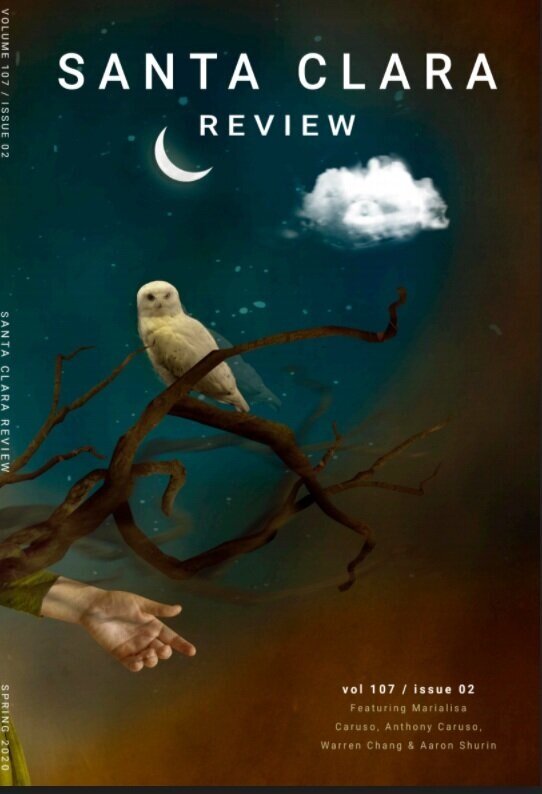
Santa Clara Review: This is the online and print journal from Santa Clara University is in its 150th year. It leans to the more accessible side, and they publish a lot of great stuff. Read a bunch before you submit, of course, and luckily they now publish a fair amount online in addition to their print edition, making your research much easier. Their submissions are fee-free, however, while they accept submissions during the summer, it isn't clear if they read them or not. Either way, great journal.

OrcaThis online fiction journal publishes three times a year, one of which is dedicated to speculative literary fiction. They accept 100 fee-free submissions each month as well as $3 submissions, so if you are tight on money be sure to check them early in the month. They're still not at their limit as of posting, but they could close at any time. If money's not tight, consider shooting them the $3. Every little bit helps keep lit magazines afloat. Submit 1 story of up to 8000 words, or 3 flash fictions under 1000 words.

Trouvaille Review is a daily journal of creative writing that occasionally will publish more than one piece by the same author in a day, but generally there's just the one. They are a more approachable journal and a good one for people new to the submission process because they need more content than periodicals. They don't publish any old thing, they still reject far more pieces than they accept, but compared to some journals that accept 2-.1% of submissions, if your craft is solid, you have a better chance. Read at least a week's worth of their pieces before submitting to make your chances better. They take email submissions, so no fee, submit 3-10 poems, and 1-3 pieces of fiction or non fiction. They also respond LIGHTNING fast. Like, under 24 hours fast.

Pacifica Literary Review is a print and online journal from Seattle that has been publishing since 2012. I'm a big fan of this journal, they are pretty eclectic and have a good amount of writing online for researching. I included one of their poems, "Blur" by James Croal Jackson, in the National Poetry Month Activity Packs/Poems to Quarantine With anthology. Submissions cost $3 for three poems, one piece of prose under 5000 words, or three pieces of flash fiction/sudden fiction of up to 1000 words.

Words and Whispers is a fledgling online journal accepting submissions for their inaugural issue. They don't give you much to go on, so your guess is as good as mine as to what their tastes are. But hey, they accept email, no-fee submissions so might as well give them a shot, right? You might be in on the historic first issue of an amazing journal. It may disappear after a couple years too, I've seen both. I think they'll do well, though. They accept submissions year round, 1-4 poems or 1-3 pieces of flash fiction under 1000 words.

from my personal collection
Straylight: This is the literary magazine from University of University-Parkside which is both print and online. Notably they DO NOT ACCEPT SIMULTANEOUS SUBMISSIONS. So don't send work that you've sent them to any other journals. While they do publish fiction, nonfiction, novellas, comics and more at different times of the year, they are only open to poetry right now in June. They definitely aren't afraid of prose poetry, and you can submit to either the online or print journal. They're a great journal that leans a little toward the accessible side of writing, but they do print a wide variety.

Threepenny Review is a legendary journal both for the quality of their work and the speed of their responses/reliability of rejection. Don't be daunted by their minuscule acceptance rate that has to be under .1%, but revel in the lotto-ticket nature of that submission. Like Straylight, they emphatically DO NO ACCEPT SIMULTANEOUS SUBMISSIONS. But they publish tons of heavy-hitters in the literary world, and with their lightning fast responses (just a touch slower than Trouvaille Review), it's definitely worth sending them your favorite poems that aren't already submitted elsewhere.

Brilliant Flash Fiction is a quarterly online journal of flash fiction. Very well-known in the Flash Fiction world, Brilliant Flash Fiction publishes an eclectic bunch of flash fiction, give their newest issue a read and see if it might be a place for your flash. Word limit is 1000 words. Email submissions so no-fees, submit only twice per quarter.

A couple summer contests

Boulevard Poetry Contest for Emerging Poets 
Requirements: The poet must have "not yet published a book of poetry with a nationally distributed press." Deadline June 14, 2020. Cost: $16 for up to 3 poems (includes a subscription to Boulevard). Prize $1000.
This is one of those contests I highly recommend because it includes a subscription to Boulevard. It's a great journal and a wonderful opportunity. But, don't send better poems than I'm sending, I want to win this before I get a first collection.

Lascaux Review's Flash Fiction Contest
Requirement: Under 1000 words. Deadline June 31, 2020. Cost: $15. Prize: You actually get a bronze medallion! And $1000, or whatever. But it totally reminds me of a Newbery Medal.


*


Check out the lists, get your work out there! I'd love to hear other journals you fine folks have found recently, or are your favorites too. And if this post or my blog in general has been helpful, I'd really appreciate any donations you might be able to spare. Submission fees can add up for me too.


6/8/20

2020 Writing Exercise Series #158: Three Things Together 24


The Notebooking Daily 2020 Writing Series is a daily writing exercises for both prose writers and poets to keep your creative mind stretched and ready to go—fresh for your other writing endeavors. The writing prompts take the impetus—that initial crystal of creation—out of your hands (for the most part) and changes your writing creation into creative problem solving. Instead of being preoccupied with the question "What do I write" you are instead pondering "How do I make this work?" And in the process you are producing new writing.


These exercises are not meant to be a standard writing session. They are meant to be productive and to keep your brain thinking about using language to solve simple or complex problems. The worst thing you can do is sit there inactive. It's like taking a 5 minute breather in the middle of a spin class—the point is to push, to produce something, however imperfect. If you don't overthink them, you will be able to complete all of the exercises in under 30 minutes.

#158
Three Things Together 24

F
or today's writing exercise you will write a piece of poetry or prose which contains the following three things, Nice and simple.

  1. A River-Smoothed Rock
  2. The Appalachian Mountains
  3. A Coffee Can
------------------------------------


If you'd like some background music to write to, try the instrumental version of Lana Del Rey's album "Honeymoon".


6/7/20

2020 Writing Exercise Series #157: Beginning & Ending with a Dip 20


The Notebooking Daily 2020 Writing Series is a daily writing exercises for both prose writers and poets to keep your creative mind stretched and ready to go—fresh for your other writing endeavors. The writing prompts take the impetus—that initial crystal of creation—out of your hands (for the most part) and changes your writing creation into creative problem solving. Instead of being preoccupied with the question "What do I write" you are instead pondering "How do I make this work?" And in the process you are producing new writing.

These exercises are not meant to be a standard writing session. They are meant to be productive and to keep your brain thinking about using language to solve simple or complex problems. The worst thing you can do is sit there inactive. It's like taking a 5 minute breather in the middle of a spin class—the point is to push, to produce something, however imperfect. If you don't overthink them, you will be able to complete all of the exercises in under 30 minutes.
#157
Beginning & Ending with a Dip 20

F
or today's writing exercise you will write a piece of poetry or prose which begins with one image, scenario, line of dialog or place and ends with another, and an optional additional requirement.

Begin WithA boy and girl dancing and the boy 'dipping' the girl.

End WithA shovel breaking the surface of the ground.

Extra Credit RequirementsInclude, somewhere in the first two paragraphs/stanzas, the phrase "whipped into shape"; and somewhere in your piece include the words: "Fresh" "Needles" "Fried" "Resin" and "Slapped".
------------------------------------

If you'd like some unobtrusive background music try this "Anime" lofi mix


6/6/20

2020 Writing Exercise Series #156: Title Mania Plus 24


The Notebooking Daily 2020 Writing Series is here! These are daily writing exercises for both prose writers and poets to keep your creative mind stretched and ready to go—fresh for your other writing endeavors. The writing prompts take the impetus—that initial crystal of creation—out of your hands (for the most part) and changes your writing creation into creative problem solving. Instead of being preoccupied with the question "What do I write" you are instead pondering "How do I make this work?" And in the process you are producing new writing.

These exercises are not meant to be a standard writing session. They are meant to be productive and to keep your brain thinking about using language to solve simple or complex problems. The worst thing you can do is sit there inactive. It's like taking a 5 minute breather in the middle of a spin class—the point is to push, to produce something, however imperfect. If you don't overthink them, you will be able to complete all of the exercises in under 30 minutes.
#156
Title Mania Plus  24

For today's writing exercise you will write a piece of poetry or prose which uses one of the following as its title. Before you write, first read the poem from which the titles are selected. For a bonus challenge use the additional exercise of five random constraints.

Today's titles are random. No poem.

Titles:
  1. "I Can't Breathe"
  2. On the Ground, Face-Down
  3. Failure to Wear a Seat Belt
  4. Forgery
  5. Wrenched by the Arm
  6. Tear Gas and Pepper Bullets

Bonus Exercise: 5 Random Constraints
(I recommend picking any required words or lines before writing with a little surplus for options, but with your chosen title in mind)
  1. The first or second word of your piece must start with a "F".
  2. You must include at least five words which rhyme with "Fire".
  3. You must include something being set on fire.
  4. You must include the words "Ball" "Milk" "Stray" "Writhed" and "Flung".
  5. You must include in your piece at least three sentences that contain exactly 3 words.
------------------------------------

If you'd like some background music to write to, try this "Welcome to the Underground" lofi playlist.

6/5/20

2020 Writing Exercise Series #155: 3x5x7 Wordbank Sprints 22


The Notebooking Daily 2020 Writing Series is a daily writing exercises for both prose writers and poets to keep your creative mind stretched and ready to go—fresh for your other writing endeavors. The writing prompts take the impetus—that initial crystal of creation—out of your hands (for the most part) and changes your writing creation into creative problem solving. Instead of being preoccupied with the question "What do I write" you are instead pondering "How do I make this work?" And in the process you are producing new writing.

These exercises are not meant to be a standard writing session. They are meant to be productive and to keep your brain thinking about using language to solve simple or complex problems. The worst thing you can do is sit there inactive. It's like taking a 5 minute breather in the middle of a spin class—the point is to push, to produce something, however imperfect. If you don't overthink them, you will be able to complete all of the exercises in under 30 minutes.

#155
3x5x7 Wordbank Sprints 22
For today's writing exercise complete the following steps. The wordbank exercise has changed so be sure to take a peek at the new 'rules'. I recommend using the timer on your phone or computer and setting it for 1 minute. Each time you write a sentence, quickly reset the timer. If it goes off before you're finished with the sentence—wrap it up ASAP!

In order to complete the large number of sentences demanded of this exercise it is imperative that you write fast. Don't think too much at all until you've reached the final exercise. The process of this quick production is to thrust past second guesses or other stumbling blocks that sometimes impede your writing. You're aiming to write 23 sentences in at most 20 minutes so you have ten minutes to organize and write that actual piece, so you're going to be writing more than a sentence a minute.

WRITE FAST, DON'T OVERTHINK


  1. Pick one word from each of three groups and write a sentence that includes all of the words, feel free to change tense, pluralize, gerund etc. Repeat the process five (5) times using different combinations. No dawdling! 
  2. Now write three (3) sentences that are six (6) words or fewer in length that use any two (2) words from the wordbanks.
  3. Now write three (3) sentences that use four (4) or more of the words.
  4. Now write five (5) sentences which begin with one (1) of the words and contain a second one (1) of the words.
  5. Now write five (5) sentences which are fewer than ten (10) words in length and conclude with one (1) of the words from the wordbanks. Remember, keep up the pace! Don't overthink!
  6. Now rephrase two (2) of your sentences from exercise #1 in either a more efficient or more descriptive manner.
  7. Now write a piece of fiction or poetry that uses at least three (3) of the sentences you've written throughout this process of exercises. Try to use as many of the (good) sentences as you can, or parts of the sentences if the whole thing doesn't fit or works better altered.


Word Bank 1:
  • Ply
  • Dollop
  • Flippant
  • Knapsack
  • Tuna
Wordbank 2:
  • Errant
  • Bike
  • Passionate
  • Milk
  • Sap

Wordbank 3
:
  • Seconded
  • Swept
  • Brighter
  • Ocelot
  • Core

Bonus writing exercise: In your piece, include someone getting dressed (or putting on an item of clothing), and you must begin three sentences with verbs.

------------------------------------

Want some unobtrusive background writing music? Try this video where Sarah Chang plays Sibelius Violin Concerto in D minor.


2020 Writing Exercise Series #154: Six Word Shootout 17


The Notebooking Daily 2020 Writing Series is a daily writing exercises for both prose writers and poets to keep your creative mind stretched and ready to go—fresh for your other writing endeavors. The writing prompts take the impetus—that initial crystal of creation—out of your hands (for the most part) and changes your writing creation into creative problem solving. Instead of being preoccupied with the question "What do I write" you are instead pondering "How do I make this work?" And in the process you are producing new writing.

These exercises are not meant to be a standard writing session. They are meant to be productive and to keep your brain thinking about using language to solve simple or complex problems. The worst thing you can do is sit there inactive. It's like taking a 5 minute breather in the middle of a spin class—the point is to push, to produce something, however imperfect. If you don't overthink them, you will be able to complete all of the exercises in under 30 minutes.

#154
Six Word Shootout 17

For today's writing exercise write a piece that includes the following six words. While it perfectly sets you up for a sestina, feel free to write whatever you'd like (but ya know, give that sestina a shot!). Also feel free to make slight alterations to the required words if you want to avoid that eye-pokey repetition you can find in sestinas sometimes. 

Required Words: 

1) Please
2) Whip
3) Scale
4) Live
5) Fill
6) New

-
Bonus Exercise: Choose your title from the following: "A Story About Leaves", "Renewed", "More, More", "Left-Hand Side" "Drifting Away" or "Never Hearing the Song for Themselves".  
------------------------------------

If you'd like some background music to write to, try Herb Ellis & Remo Palmier ‎– Windflower


6/3/20

2020 Writing Exercise Series #153: Three Things Together 23


The Notebooking Daily 2020 Writing Series is a daily writing exercises for both prose writers and poets to keep your creative mind stretched and ready to go—fresh for your other writing endeavors. The writing prompts take the impetus—that initial crystal of creation—out of your hands (for the most part) and changes your writing creation into creative problem solving. Instead of being preoccupied with the question "What do I write" you are instead pondering "How do I make this work?" And in the process you are producing new writing.


These exercises are not meant to be a standard writing session. They are meant to be productive and to keep your brain thinking about using language to solve simple or complex problems. The worst thing you can do is sit there inactive. It's like taking a 5 minute breather in the middle of a spin class—the point is to push, to produce something, however imperfect. If you don't overthink them, you will be able to complete all of the exercises in under 30 minutes.

#153
Three Things Together 23

F
or today's writing exercise you will write a piece of poetry or prose which contains the following three things, Nice and simple.

  1. The New York Mets
  2. A Flat Tire
  3. A Traffic Cone
------------------------------------


If you'd like some background music to write to, try this "Concentrate Your Mind" lofi playlist.


6/2/20

2020 Writing Exercise Series #152: Between a Fact and an Exact Place 13


The Notebooking Daily 2020 Writing Series is a daily writing exercises for both prose writers and poets to keep your creative mind stretched and ready to go—fresh for your other writing endeavors. The writing prompts take the impetus—that initial crystal of creation—out of your hands (for the most part) and changes your writing creation into creative problem solving. Instead of being preoccupied with the question "What do I write" you are instead pondering "How do I make this work?" And in the process you are producing new writing.


These exercises are not meant to be a standard writing session. They are meant to be productive and to keep your brain thinking about using language to solve simple or complex problems. The worst thing you can do is sit there inactive. It's like taking a 5 minute breather in the middle of a spin class—the point is to push, to produce something, however imperfect. If you don't overthink them, you will be able to complete all of the exercises in under 30 minutes.
#152
Between a Fact and an Exact Place 13
For today's writing exercise you will write a piece of poetry or prose which contains the following place (either as the setting, referenced or some aspect of it described) and the following fact in some way (its discovery, used as a metaphor, witnessed etc).

Fact: The Toyota Corolla is the most-sold automobile of all-time.


As an additional assignment, should you choose to incorporate it, is as follows: Also include the words "Wand" "Germane" "Wicker" "Hoop" and "Groom".
------------------------------------


If you'd like some background music to write to, try the album SYNAPSIS - Minimalist piano by David Fedele.


6/1/20

2020 Writing Exercise Series #151: Beginning & Ending with a Crunch 19


The Notebooking Daily 2020 Writing Series is a daily writing exercises for both prose writers and poets to keep your creative mind stretched and ready to go—fresh for your other writing endeavors. The writing prompts take the impetus—that initial crystal of creation—out of your hands (for the most part) and changes your writing creation into creative problem solving. Instead of being preoccupied with the question "What do I write" you are instead pondering "How do I make this work?" And in the process you are producing new writing.

These exercises are not meant to be a standard writing session. They are meant to be productive and to keep your brain thinking about using language to solve simple or complex problems. The worst thing you can do is sit there inactive. It's like taking a 5 minute breather in the middle of a spin class—the point is to push, to produce something, however imperfect. If you don't overthink them, you will be able to complete all of the exercises in under 30 minutes.
#151
Beginning & Ending with a Crunch 19

F
or today's writing exercise you will write a piece of poetry or prose which begins with one image, scenario, line of dialog or place and ends with another, and an optional additional requirement.

Begin WithA fender bender (car accident).

End WithSomeone stepping on a thinly-iced over puddle.

Extra Credit RequirementsInclude, somewhere in the first two paragraphs/stanzas, the phrase "head west"; and somewhere in your piece include the words: "Major" "Beeping" "Failure" "Resistance" and "Stolen".
------------------------------------

If you'd like some unobtrusive background music try Philip Glass's album "Glassworks"