2/17/20

2020 Writing Exercise Series #48: 3x5x7 Wordbank Sprints 6


The Notebooking Daily 2020 Writing Series is a daily writing exercises for both prose writers and poets to keep your creative mind stretched and ready to go—fresh for your other writing endeavors. The writing prompts take the impetus—that initial crystal of creation—out of your hands (for the most part) and changes your writing creation into creative problem solving. Instead of being preoccupied with the question "What do I write" you are instead pondering "How do I make this work?" And in the process you are producing new writing.

These exercises are not meant to be a standard writing session. They are meant to be productive and to keep your brain thinking about using language to solve simple or complex problems. The worst thing you can do is sit there inactive. It's like taking a 5 minute breather in the middle of a spin class—the point is to push, to produce something, however imperfect. If you don't overthink them, you will be able to complete all of the exercises in under 30 minutes.

#48
3x5x7 Wordbank Sprints 6
For today's writing exercise complete the following steps. The wordbank exercise has changed so be sure to take a peek at the new 'rules'. I recommend using the timer on your phone or computer and setting it for 1 minute. Each time you write a sentence, quickly reset the timer. If it goes off before you're finished with the sentence—wrap it up ASAP!

In order to complete the large number of sentences demanded of this exercise it is imperative that you write fast. Don't think too much at all until you've reached the final exercise. The process of this quick production is to thrust past second guesses or other stumbling blocks that sometimes impede your writing. You're aiming to write 23 sentences in at most 20 minutes so you have ten minutes to organize and write that actual piece, so you're going to be writing more than a sentence a minute.

WRITE FAST, DON'T OVERTHINK


  1. Pick one word from each of three groups and write a sentence that includes all of the words, feel free to change tense, pluralize, gerund etc. Repeat the process five (5) times using different combinations. No dawdling! 
  2. Now write three (3) sentences that are six (6) words or fewer in length that use any two (2) words from the wordbanks.
  3. Now write three (3) sentences that use four (4) or more of the words.
  4. Now write five (5) sentences which begin with one (1) of the words and contain a second one (1) of the words.
  5. Now write five (5) sentences which are fewer than ten (10) words in length and conclude with one (1) of the words from the wordbanks. Remember, keep up the pace! Don't overthink!
  6. Now rephrase two (2) of your sentences from exercise #1 in either a more efficient or more descriptive manner.
  7. Now write a piece of fiction or poetry that uses at least three (3) of the sentences you've written throughout this process of exercises. Try to use as many of the (good) sentences as you can, or parts of the sentences if the whole thing doesn't fit or works better altered.


Word Bank 1:
  • Lurid
  • Broach
  • Brick
  • Tilled
  • Floral
Wordbank 2:
  • Tea
  • Bamboo
  • Granular
  • Gradient
  • Wreckage

Wordbank 3
:
  • Wrest
  • Loop
  • Luscious
  • Vaccine
  • Projection

Bonus writing exercise: Include an image of a glacier calving, and a the phrase "Blue in the face" either in your piece or as the title.

------------------------------------

Want some mellow background writing music? Try this compilation album of Greek Electronic artists called "Micro Beat"


2/16/20

2020 Writing Exercise Series #47: Between a Fact and an Exact Place 6


The Notebooking Daily 2020 Writing Series is a daily writing exercises for both prose writers and poets to keep your creative mind stretched and ready to go—fresh for your other writing endeavors. The writing prompts take the impetus—that initial crystal of creation—out of your hands (for the most part) and changes your writing creation into creative problem solving. Instead of being preoccupied with the question "What do I write" you are instead pondering "How do I make this work?" And in the process you are producing new writing.


These exercises are not meant to be a standard writing session. They are meant to be productive and to keep your brain thinking about using language to solve simple or complex problems. The worst thing you can do is sit there inactive. It's like taking a 5 minute breather in the middle of a spin class—the point is to push, to produce something, however imperfect. If you don't overthink them, you will be able to complete all of the exercises in under 30 minutes.
#47
Between a Fact and an Exact Place 6
For today's writing exercise you will write a piece of poetry or prose which contains the following place (either as the setting, referenced or some aspect of it described) and the following fact in some way (its discovery, used as a metaphor, witnessed etc).


------------------------------------


If you'd like some background music to write to, try Vivaldi's Concertos for Bassoon played by Klaus Thuneman.


2/15/20

2020 Writing Exercise Series #46: Title Mania Plus Running 7


The Notebooking Daily 2020 Writing Series is here! These are daily writing exercises for both prose writers and poets to keep your creative mind stretched and ready to go—fresh for your other writing endeavors. The writing prompts take the impetus—that initial crystal of creation—out of your hands (for the most part) and changes your writing creation into creative problem solving. Instead of being preoccupied with the question "What do I write" you are instead pondering "How do I make this work?" And in the process you are producing new writing.

These exercises are not meant to be a standard writing session. They are meant to be productive and to keep your brain thinking about using language to solve simple or complex problems. The worst thing you can do is sit there inactive. It's like taking a 5 minute breather in the middle of a spin class—the point is to push, to produce something, however imperfect. If you don't overthink them, you will be able to complete all of the exercises in under 30 minutes.
#46
Title Mania Plus Running 7

For today's writing exercise you will write a piece of poetry or prose which uses one of the following as its title. For a bonus challenge use the additional exercise of five random constraints.


Titles:
  1. Running Errands 'Real Quick'
  2. A Marathon of Sorts
  3. Sprinting Toward the Tape
  4. Rundown
  5. Runway in Disrepair

Bonus Exercise: 5 Random Constraints
(I recommend picking any required words or lines before writing with a little surplus for options, but with your chosen title in mind)
  1. The first or second word of your piece must be "Sick".
  2. You must include at least five words which rhyme with "Wheat".
  3. You must include the smell of burning food.
  4. You must include the words "Traits" "Tomcat" "Erased" "Prong" and "Vitamin".
  5. You must include in your piece at least three different shades of blue.

------------------------------------

If you'd like some background music to write to, try this "Train Trip to Tokyo" lofi hip hop mix by Pueblo Vista.


2/14/20

2020 Writing Exercise Series #45: Three Things Together 7


The Notebooking Daily 2020 Writing Series is a daily writing exercises for both prose writers and poets to keep your creative mind stretched and ready to go—fresh for your other writing endeavors. The writing prompts take the impetus—that initial crystal of creation—out of your hands (for the most part) and changes your writing creation into creative problem solving. Instead of being preoccupied with the question "What do I write" you are instead pondering "How do I make this work?" And in the process you are producing new writing.


These exercises are not meant to be a standard writing session. They are meant to be productive and to keep your brain thinking about using language to solve simple or complex problems. The worst thing you can do is sit there inactive. It's like taking a 5 minute breather in the middle of a spin class—the point is to push, to produce something, however imperfect. If you don't overthink them, you will be able to complete all of the exercises in under 30 minutes.

#45
Three Things Together 7
For today's writing exercise you will write a piece of poetry or prose which contains the following three things, Nice and simple.

  1. A Paring Knife
  2. Elmer Fudd
  3. A Flash Flood

------------------------------------


If you'd like some background music to write to, try this Nighttime Ramen lofi mix by Chillhop Music


2/13/20

2020 Writing Exercise Series #44: Between a Fact and an Exact Place 5


The Notebooking Daily 2020 Writing Series is a daily writing exercises for both prose writers and poets to keep your creative mind stretched and ready to go—fresh for your other writing endeavors. The writing prompts take the impetus—that initial crystal of creation—out of your hands (for the most part) and changes your writing creation into creative problem solving. Instead of being preoccupied with the question "What do I write" you are instead pondering "How do I make this work?" And in the process you are producing new writing.


These exercises are not meant to be a standard writing session. They are meant to be productive and to keep your brain thinking about using language to solve simple or complex problems. The worst thing you can do is sit there inactive. It's like taking a 5 minute breather in the middle of a spin class—the point is to push, to produce something, however imperfect. If you don't overthink them, you will be able to complete all of the exercises in under 30 minutes.
#44
Between a Fact and an Exact Place 5
For today's writing exercise you will write a piece of poetry or prose which contains the following place (either as the setting, referenced or some aspect of it described) and the following fact in some way (its discovery, used as a metaphor, witnessed etc).


------------------------------------


If you'd like some background music to write to, try Hilary Hahn with the Frankfurt Orchestra playing Brahms.


2/12/20

2020 Writing Exercise Series #43: Rhymebank Rounds-Rhyming Poem 2


The Notebooking Daily 2020 Writing Series is a daily writing exercises for both prose writers and poets to keep your creative mind stretched and ready to go—fresh for your other writing endeavors. The writing prompts take the impetus—that initial crystal of creation—out of your hands (for the most part) and changes your writing creation into creative problem solving. Instead of being preoccupied with the question "What do I write" you are instead pondering "How do I make this work?" And in the process you are producing new writing.


These exercises are not meant to be a standard writing session. They are meant to be productive and to keep your brain thinking about using language to solve simple or complex problems. The worst thing you can do is sit there inactive. It's like taking a 5 minute breather in the middle of a spin class—the point is to push, to produce something, however imperfect. If you don't overthink them, you will be able to complete all of the exercises in under 30 minutes. 
This may be pushing 45 unless you're really writing fast.

#43
Rhymebank Rounds-Rhyming Poem 2

Rhymbank Rounds are a new type of exercise. Kind of like the Wordbank sprints, but there will be more focus on editing and re-writing, and you'll complete a piece, with the main focus of the exercises being on Like Sounds. If you're typing I suggest copy/pasting the lines you're editing to save time, save the originals in their own exercise space.


  1. Take three minutes and jot down/type all rhymes and slant rhymes (include phrases for multi-syllabic words/feminine rhymes) you can think of just off the top of your head for the word: Slick. If you have trouble getting more than ten or so remember to rhyme with slit and picked. You want to have close to thirty (30) words even if they're only kind of rhyming.
  2. Pick four of those words you wrote down and underline/bold them. Write three sentences for each of those words which include at least two other words from the rhymebank you generated from #1. Try to use even more words without making the sentence awkward or too weird—a little weird can be good though.
  3. Fragment time! Write down ten (10) sentence fragments which end with words from your rhymebank—they should end in either a comma or a period. Try to work in additional 'like' sounds if you can. You don't need to know the rest of the sentence or the context so something like "a broken brown brick" or "which is his pick?".
  4. Fragment time 2! Write at least ten (10) 5-word partial sentences that use at least two (2) words from your list. Don't worry about context or what might be being said, just make sure you can make some logic of the phrasing.
  5. Short fragment time! Write five (5) three-word partial sentences which use two (2) words from your rhymebank back to back. No dawdling, but try to switch it up and use words you hadn't yet if you can. An example would be "a thick stick" or "he bit quick".
    -
Poem or story time!
  1. Rhymed Poem: Write a poem that is 12 lines in four tercets (3-lined stanzas) with the rhyme scheme ABA CBC ABC BBB with B being words from your rhymebank. Try to use fragments from the previous exercises and even the rhymebank itself to fill out your poem with as many 'like' sounds as you can within the lines. If you want more guidance, pick your favorite 3 fragments that ends in the rhymebank sound that can be an ending. Your favorite is what you will build your ending around. If it works as the end of a poem have that be the end and try to use one of your other fragments as one of the other B rhymes. Once you have your final stanza, pick one word that doesn't rhyme with B that has a good amount of rhymes, that will be your rhyme for A. Repeat step 1 and pick your favorite 3 for your A rhymes. Now write that first stanza, knowing you have the rhyme scheme, one fragment (end of line) and it's in the context of that it's the beginning of the poem leading to that final stanza you've already written. Start with something not directly in line, but that has something in common with the ending. Use the poem to go from that opening stanza to the final one. Don't try to do too much, write descriptively and only include at most one more 'thing' beyond the first and last stanza, you don't want to leave bits of the poem unexplored and you are only working with 12 lines here. If you're feeling especially motivated when you've written the final stanza feel free to either add 9 more lines (first 3 tercets repeated before the final one) or just straight double the rhyme scheme and lines so it is a 24 lined poem that ends with a second BBB stanza.
  2. Free form narrative: Pick your ten favorite fragments and find a way to fit those pieces together. What do I mean by fit them together? I mean that you're required to use ten of the fragments you'd written in a coherent piece by adding connective tissue and exposition/whatever needs to get you narratively from one line to the next. Whether you write this as a story or a poem is up to you. 
  3. Title Mania: Write a piece that uses your favorite fragment as your title.
------------------------------------

If you'd like some background music, try this 1963 surf rock instrumental album "Surfin' Wild" by Jim Waller And The Deltas.


2/11/20

2020 Writing Exercise Series #42: Erasing "Out of Season" 2


The Notebooking Daily 2020 Writing Series is a daily writing exercises for both prose writers and poets to keep your creative mind stretched and ready to go—fresh for your other writing endeavors. The writing prompts take the impetus—that initial crystal of creation—out of your hands (for the most part) and changes your writing creation into creative problem solving. Instead of being preoccupied with the question "What do I write" you are instead pondering "How do I make this work?" And in the process you are producing new writing.


These exercises are not meant to be a standard writing session. They are meant to be productive and to keep your brain thinking about using language to solve simple or complex problems. The worst thing you can do is sit there inactive. It's like taking a 5 minute breather in the middle of a spin class—the point is to push, to produce something, however imperfect. If you don't overthink them, you will be able to complete all of the exercises in under 30 minutes.

#42
Erasing "Out of Season" 2

For today's exercise we have split paths for fiction and poetry, though I highly recommend that even fiction writers try the poetry exercise, because erasures can be a blast!

For poetry do an erasure or black-out poem from the following selection of Ernest Hemingway's 1923 short story "Out of Season". An Erasure/Blackout is really simple: you take the given text and remove many words to make it your own new piece. One way to go about the erasure that I like to do is to copy the text and paste it twice into your document before you start erasing or blacking out (in MS Word set the text background color to black), that way if you get further into the erasure and decide you want a somewhat different tone or direction, it's easy to go to the unaltered version and make the erasure/black-out piece smoother. Another tip is to look for recurring words, in this example marsala occurs many times and could be a good touchstone for your piece.

If you insist on fiction, write a piece with one of the three titles taken from this section:

  1.  "Rusty Bobsleds" 
  2. "Getting at the Same Thing From Different Angles" 
  3. "With Much Winking"


Today's excerpt is a little short so keep that in mind\ when composing your erasure.

Erasure Selection:

from "Out of Season"

OUT OF SEASON

It is closed until two, someone passing in the street said scornfully. Peduzzi came down the steps. He felt hurt. Never mind, he said, we can get it at the Concordia.

They walked down the road to the Concordia three abreast. On the porch of the Concordia, where the rusty bobsleds were stacked the young gentleman said, Was wollen Sie? Peduzzi handed him the ten lira note folded over and over. Nothing, he said, Anything. He was embarrassed. Marsala, maybe. I don't know. Marsala?

The door of the Concordia shut on the young gentleman and the wife. Three marsalas, said the y. g. to the girl behind the pastry counter. Two, you mean? she asked. No, he said, one for a vecchio. Oh, she said, a vecchio, and laughed, getting down the bottle. She poured out the three muddy looking drinks into three glasses. The wife was sitting at a table under the line of newspapers on sticks. The y. g. put one of the marsalas in front of her. You might as well drink it, he said, maybe it'll make you feel better. She sat and looked at the glass. The y. g. went outside the door with a glass for Peduzzi but could not see him.

I don't know where he is, he said, coming back into the pastry room carrying the glass.

He wanted a quart of it, said the wife.

How much is a quarter litre? the y. g. asked the girl.

Of the bianco? One lira.

No, of the marsala. Put these two in, too, he said, giving her his own glass and the one poured for Peduzzi. She filled the quarter litre wine measure with a funnel. A bottle to carry it, said the y. g.

She went to hunt for a bottle. It all amused her.

I'm sorry you feel so rotten, Tiny, he said. I'm sorry I talked the way I did at lunch. We were both getting at the same thing from different angles.

It doesn't make any difference, she said. None of it makes any difference.

Are you too cold? he asked. I wish you'd worn another sweater.

I've got on three sweaters.

The girl came in with a very slim brown bottle and poured the marsala into it. The y. g. paid five lire more. They went out the door. The girl was amused. Peduzzi was walking up and down at the other end out of the wind and holding the rods.

Come on he said, I will carry the rods. What difference does it make if anybody sees them? No one will trouble us. No one will make any trouble for me in Cortina. I know them at the municipio. I have been a soldier. Everybody in this town likes me. I sell frogs. What if it is forbidden to fish? Not a thing. Nothing. No trouble. Big trout, I tell you. Lots of them.

They were walking down the hill toward the river. The town was in back of them. The sun had gone under and it was sprinkling rain. There, said Peduzzi, pointing to a girl in the doorway of a house they passed. My daughter.

His doctor, the wife said, has he got to show us his doctor?

He said his daughter, said the y. g.

The girl went into the house as Peduzzi pointed.

They walked down the hill across the fields and then turned to follow the river bank. Peduzzi talked rapidly with much winking and knowingness. As they walked three abreast the wife caught his breath across the wind. Once he nudged her in the ribs. Part of the time he talked in D'Ampezzo dialect and and sometimes in Tyroler German dialect. He could not make out which the young gentleman and his wife understood the best so he was being bilingual. But as the young gentleman said Ja Ja Peduzzi decided to talk altogether in Tyroler. The young gentleman and the wife understood nothing.
------------------------------------

If you'd like some background music to write to, try producer ford.'s album "(The) Evening.


2/10/20

2020 Writing Exercise Series #41: Beginning & Ending with Shells 6


The Notebooking Daily 2020 Writing Series is a daily writing exercises for both prose writers and poets to keep your creative mind stretched and ready to go—fresh for your other writing endeavors. The writing prompts take the impetus—that initial crystal of creation—out of your hands (for the most part) and changes your writing creation into creative problem solving. Instead of being preoccupied with the question "What do I write" you are instead pondering "How do I make this work?" And in the process you are producing new writing.

These exercises are not meant to be a standard writing session. They are meant to be productive and to keep your brain thinking about using language to solve simple or complex problems. The worst thing you can do is sit there inactive. It's like taking a 5 minute breather in the middle of a spin class—the point is to push, to produce something, however imperfect. If you don't overthink them, you will be able to complete all of the exercises in under 30 minutes.
#41
Beginning & Ending with Shells 6

F
or today's writing exercise you will write a piece of poetry or prose which begins with one image, scenario, line of dialog or place and ends with another, and an optional additional requirement.


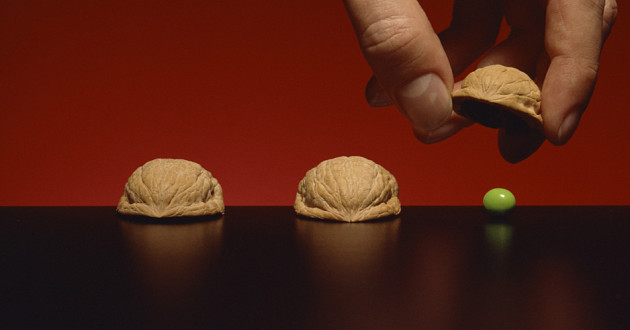
Begin WithA street hustler playing the shell game.

End WithShells (sea shells or ammunition shells) falling down into the sand.


Extra Credit RequirementsInclude an episodic river (one that's only there during floods but often leaves a dry bed); and the words: "Ruby" "Darn" "Buttoned" "Collision" and "Crunch".


------------------------------------

If you'd like some unobtrusive background music, try producer ODESZA's album "Summer's Gone".


2/9/20

The Publishing Life: Journal Submission Journal 2/9/20


Journal Submission Journal 2/9/20

I'm always looking for new journals and refreshing myself on journals I haven't seen in awhile both just as a reader, but also to get a good feel for if my work would fit well, or if I should remain a reader and not a submitter. Not everyone has the time to browse journals (and I may not either, before long), so I figured I would make a few notes of what I've found in my research for poetry submissions, fiction submissions and creative writing contest submissions.


Lists:

Entropy Mag's list of where to submit is a great resource and I definitely combed through it quite a bit this last month.
Zebulon's Flash Fiction Submission Guide. Yeah, I'll admit I referenced this, I put a lot of work into it, and though it's almost 5 years old and needs an update, there are a lot of smaller and lesser known journals I reminded myself with using this guide.
Duotrope. Always. A great search and browse function.
Submittable Discover Tab. Good for deadlines. There are a few Feb 15th deadlines and definitely some Feb. 28th ones to keep your eye on.
Poets & Writers Contest Calendar. If you've got a little extra scratch and want to enter some contests this is one of the best places to go. I used this a bit in January but overextended my submission budget a bit so I'm back to pacing out those $3 submissions.

Journals:

Spry Literary Journal: Cool little journal, nice variety, pretty accessible but quirky. I really dug Marvin Shackleford's On Water. Here is there submission info.

Pidgeonholes: I was reading through Wigleaf's Top50 flash fictions of 2019 list and the multiple stories published by Pidgeonholes caught my eye. I especially like their submission guidelines: "We seek to publish work with the grit of heavy-duty sandpaper: words that will tear and scar. Send us your literary, speculative, experimental, or absurdly unclassifiable, just make it bold and beautiful."

Dreginald: This is a quirky and gritty lo-fi journal with some really interesting writing and a decidedly simple visual aesthetic. The complex work plays well off the minimalist design of the site. Definitely read a number of pieces before considering sending work here, but also, just read a bunch of it anyway, it's rad. They're not afraid of adult content and also not afraid of longer poems, so if you like long poems definitely check it out.

Cordite Poetry Journal. This online Australian journal is another cool one I've seen around a few times but hadn't read much until recently. It's an eclectic journal so give a number of poems a read before submitting for sure. I especially liked The Waterside by Zoe Holman in the current issue. They have a Feb. 15th deadline.

Orange Blossom Review. Another eclectic journal I discovered this past month. I like their journal's clean aesthetic and they published quality work. I especially liked The End of the World by Rae Hoffman Jager from the new issue. They also have a Feb. 15th deadline.

*

I'd love to hear other journals you fine folks have found recently too! And if this post or my blog in general has been helpful, I'd really appreciate any donations you might be able to spare. Every dollar will go directly to my own submissions, and every dollar helps. Thanks, and have a great week!


2020 Writing Exercise Series #40: Ekphrastic Power Lines 4


The Notebooking Daily 2020 Writing Series is a daily writing exercises for both prose writers and poets to keep your creative mind stretched and ready to go—fresh for your other writing endeavors. The writing prompts take the impetus—that initial crystal of creation—out of your hands (for the most part) and changes your writing creation into creative problem solving. Instead of being preoccupied with the question "What do I write" you are instead pondering "How do I make this work?" And in the process you are producing new writing.

These exercises are not meant to be a standard writing session. They are meant to be productive and to keep your brain thinking about using language to solve simple or complex problems. The worst thing you can do is sit there inactive. It's like taking a 5 minute breather in the middle of a spin class—the point is to push, to produce something, however imperfect. If you don't overthink them, you will be able to complete all of the exercises in under 30 minutes.

#40
Ekphrastic Power Lines 4


For today, we're going to write a poem or prose piece inspired by another piece of art, or an ekphrastic piece. The piece of art in question is this render by digital artist Wataboku.

No handholding today. Like the subject of this painting you're walking without a safety net. You can imagine yourself as her, as someone idolizing/building her up, it could be a magical realism memory or someone who is not of this world/with supernatural abilities allowing her to walk on those lines. Metaphor is your friend, look at the details like the birds, the hills mottling the ground, the ribbon her tie. You got this.
---

If you'd like background writing music try Tchaikovsky, Souvenir de Florence, op. 70
7th part (for double bass).


2/8/20

2020 Writing Exercise Series #39: Title Mania Plus Tip 6


The Notebooking Daily 2020 Writing Series is here! These are daily writing exercises for both prose writers and poets to keep your creative mind stretched and ready to go—fresh for your other writing endeavors. The writing prompts take the impetus—that initial crystal of creation—out of your hands (for the most part) and changes your writing creation into creative problem solving. Instead of being preoccupied with the question "What do I write" you are instead pondering "How do I make this work?" And in the process you are producing new writing.

These exercises are not meant to be a standard writing session. They are meant to be productive and to keep your brain thinking about using language to solve simple or complex problems. The worst thing you can do is sit there inactive. It's like taking a 5 minute breather in the middle of a spin class—the point is to push, to produce something, however imperfect. If you don't overthink them, you will be able to complete all of the exercises in under 30 minutes.
#39
Title Mania Plus Tip 6

For today's writing exercise you will write a piece of poetry or prose which uses one of the following as its title. For a bonus challenge use the additional exercise of five random constraints.


Titles:
  1. Tiptoeing After Bedtime
  2. Like a Tipping Canoe
  3. Battle of Tippecanoe
  4. Tip-Top Shape
  5. For a Twenty Percent Tip

Bonus Exercise: 5 Random Constraints
(I recommend picking any required words or lines before writing with a little surplus for options, but with your chosen title in mind)
  1. The first or second word of your piece must be "New".
  2. You must include at least five words which rhyme with "Trick".
  3. You must include something skipping cross water like a stone (that isn't a stone).
  4. You must include the words "Tropics" "Tide" "Flagrant" "Equals" and "Vibrant".
  5. You must include a list of 4 or more professions.

------------------------------------

If you'd like some background music to write to, try classical bassist Gary Karr playing JS Bach's Solo Suites.


2/7/20

2020 Writing Exercise Series #38: Three Things Together 6


The Notebooking Daily 2020 Writing Series is a daily writing exercises for both prose writers and poets to keep your creative mind stretched and ready to go—fresh for your other writing endeavors. The writing prompts take the impetus—that initial crystal of creation—out of your hands (for the most part) and changes your writing creation into creative problem solving. Instead of being preoccupied with the question "What do I write" you are instead pondering "How do I make this work?" And in the process you are producing new writing.


These exercises are not meant to be a standard writing session. They are meant to be productive and to keep your brain thinking about using language to solve simple or complex problems. The worst thing you can do is sit there inactive. It's like taking a 5 minute breather in the middle of a spin class—the point is to push, to produce something, however imperfect. If you don't overthink them, you will be able to complete all of the exercises in under 30 minutes.

#38
Three Things Together 6
For today's writing exercise you will write a piece of poetry or prose which contains the following three things, Nice and simple.


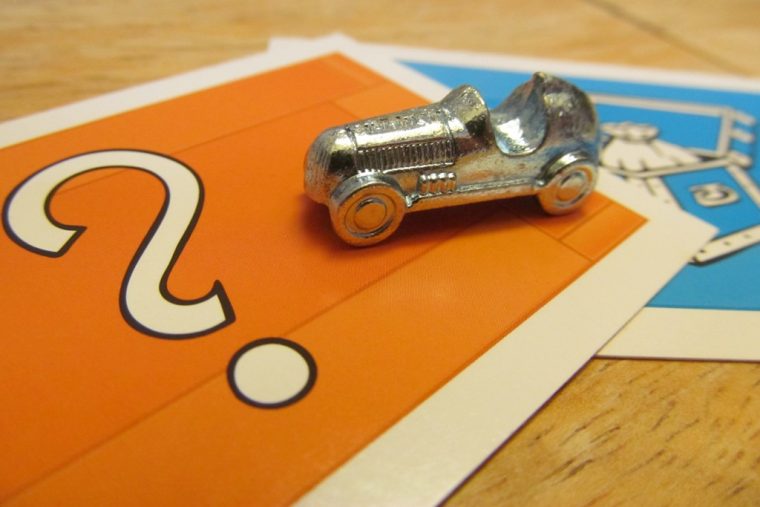
  1. A Racecar Monopoly Piece
  2. A Kayak
  3. A Honda Civic

------------------------------------


If you'd like some background music to write to, try this interesting minimalist audible 'narrative journey' that I stumbled on by Willman Jex called "In Search of Shadows". It transitions without anything jarring that would take you out of your writing session but keeps from being too monotonous or the same mood/tempo. Plus it only had 9 views which is pretty crazy, I'll definitely be using it for background writing music in the future.


2/6/20

2020 Writing Exercise Series #37: 3x5x7 Wordbank Sprints 5


The Notebooking Daily 2020 Writing Series is a daily writing exercises for both prose writers and poets to keep your creative mind stretched and ready to go—fresh for your other writing endeavors. The writing prompts take the impetus—that initial crystal of creation—out of your hands (for the most part) and changes your writing creation into creative problem solving. Instead of being preoccupied with the question "What do I write" you are instead pondering "How do I make this work?" And in the process you are producing new writing.

These exercises are not meant to be a standard writing session. They are meant to be productive and to keep your brain thinking about using language to solve simple or complex problems. The worst thing you can do is sit there inactive. It's like taking a 5 minute breather in the middle of a spin class—the point is to push, to produce something, however imperfect. If you don't overthink them, you will be able to complete all of the exercises in under 30 minutes.


#37
3x5x7 Wordbank Sprints 5
For today's writing exercise complete the following steps. The wordbank exercise has changed so be sure to take a peek at the new 'rules'. I recommend using the timer on your phone or computer and setting it for 1 minute. Each time you write a sentence, quickly reset the timer. If it goes off before you're finished with the sentence—wrap it up ASAP!

In order to complete the large number of sentences demanded of this exercise it is imperative that you write fast. Don't think too much at all until you've reached the final exercise. The process of this quick production is to thrust past second guesses or other stumbling blocks that sometimes impede your writing. You're aiming to write 23 sentences in at most 20 minutes so you have ten minutes to organize and write that actual piece, so you're going to be writing more than a sentence a minute.

WRITE FAST, DON'T OVERTHINK


  1. Pick one word from each of three groups and write a sentence that includes all of the words, feel free to change tense, pluralize, gerund etc. Repeat the process five (5) times using different combinations. No dawdling! 
  2. Now write three (3) sentences that are six (6) words or fewer in length that use any two (2) words from the wordbanks.
  3. Now write three (3) sentences that use four (4) or more of the words.
  4. Now write five (5) sentences which begin with one (1) of the words and contain a second one (1) of the words.
  5. Now write five (5) sentences which are fewer than ten (10) words in length and conclude with one (1) of the words from the wordbanks. Remember, keep up the pace! Don't overthink!
  6. Now rephrase two (2) of your sentences from exercise #1 in either a more efficient or more descriptive manner.
  7. Now write a piece of fiction or poetry that uses at least three (3) of the sentences you've written throughout this process of exercises. Try to use as many of the (good) sentences as you can, or parts of the sentences if the whole thing doesn't fit or works better altered.


Word Bank 1:
  • Boxy
  • Flood
  • Elongate
  • Wrench
  • Drapery
Wordbank 2:
  • Sapling
  • Droop
  • Trident
  • Blade
  • Twine

Wordbank 3
:
  • Ford
  • Yellowing
  • Pilot
  • Grind
  • Amplified

Bonus writing exercise: Include an image of a boat on fire in your piece, and someone drinking a glass of strawberry-flavored milk.

------------------------------------

Want some mellow background writing music? Try minimalist composer Steve Reich's album "Music for 18 Musicians"


2/5/20

2020 Writing Exercise Series #36: Between a Fact and an Exact Place 4


The Notebooking Daily 2020 Writing Series is a daily writing exercises for both prose writers and poets to keep your creative mind stretched and ready to go—fresh for your other writing endeavors. The writing prompts take the impetus—that initial crystal of creation—out of your hands (for the most part) and changes your writing creation into creative problem solving. Instead of being preoccupied with the question "What do I write" you are instead pondering "How do I make this work?" And in the process you are producing new writing.


These exercises are not meant to be a standard writing session. They are meant to be productive and to keep your brain thinking about using language to solve simple or complex problems. The worst thing you can do is sit there inactive. It's like taking a 5 minute breather in the middle of a spin class—the point is to push, to produce something, however imperfect. If you don't overthink them, you will be able to complete all of the exercises in under 30 minutes.
#36
Between a Fact and an Exact Place 4
For today's writing exercise you will write a piece of poetry or prose which contains the following place (either as the setting, referenced or some aspect of it described) and the following fact in some way (its discovery, used as a metaphor, witnessed etc).


------------------------------------


If you'd like some background music to write to, electronic artist Mose's "Reveries" live DJ set looping and mixing a bunch of his songs together for an interwoven experience.


2020 Writing Exercise Series #35 Before Anaphora—Repetition Files 3


The Notebooking Daily 2020 Writing Series is a daily writing exercises for both prose writers and poets to keep your creative mind stretched and ready to go—fresh for your other writing endeavors. The writing prompts take the impetus—that initial crystal of creation—out of your hands (for the most part) and changes your writing creation into creative problem solving. Instead of being preoccupied with the question "What do I write" you are instead pondering "How do I make this work?" And in the process you are producing new writing.


These exercises are not meant to be a standard writing session. They are meant to be productive and to keep your brain thinking about using language to solve simple or complex problems. The worst thing you can do is sit there inactive. It's like taking a 5 minute breather in the middle of a spin class—the point is to push, to produce something, however imperfect. If you don't overthink them, you will be able to complete all of the exercises in under 30 minutes.

#35
Before Anaphora—Repetition Files 3

For today's writing exercise you will write a piece of poetry or prose which focuses on repetition. In this instance we will work with anaphora. It's a handy little bit of poetic craft that goes a little something like this:

the repetition of a word or words at the beginning of successive phrases, clauses, or lines to create a sonic effect.
Take a moment and read the Poetry Foundation article, even if you know the term. For even more fun check out this longer article called Adventures in Anaphora.

The word or phrase we'll use for our exercise today is:

"Before"

    There are a number of ways you could approach this bit of anaphora. You could tell a story in reverse order, beginning with the final event and slowly building back to the event that kickstarted the narrative. You could make a list of historical events that happened after one pivotal moment in history that you'd like to highlight. It could be a more personal recounting of important events. Or do something completely different. Just be sure that the repeated phrase earns its worth in your piece. It should be necessary.

    Bonus Exercise: Include these five words into your piece "Delusion" "Neglect" "Regain" "Zen" and "Joint".

    ------------------------------------

    If you'd like some background music to write to, try reggae artist Bamboo's eponymous album.


    2/3/20

    Build a Story Mondays: February Edition 1 of 4

    What is Build a Story? It is a series of four exercises taking a total of 90 minutes, resulting in a piece of flash fiction or a poem. The first three weeks you will write quickly for twenty minutes and be done. The fourth week is half an hour in length, and you'll be putting together your story's bare bones and fleshing it out.

    Weeks 1-3 you will answer 3 questions with as many sentences as you can type/write in five minutes. And then you'll rewrite your three favorite sentences over the next four minutes. Done for the week.
    In week 4 you'll just need 30 minutes to arrange your sentences into the structure of your story and add in the little bit that's needed to connect the pieces together.

    February 2020, Edition 1 of 4
    Remember, no dawdling. You want to write as very many sentences as you can.
    1. Describe a creature/animal/person leaving their home/den etc. Get creative with what's leaving and how, but don't just play the 'thesaurus game'. Be accurate with the type of home they're leaving.
    2. Think of the first six words or phrases you can think of to describe someone that just got amazing news. Not just "happy" synonyms, either. Now for each of those words/phrases write three sentences that use that word and either one of the animals/creatures from #1, or include a geologic term like mountain, delta, trench etc. No need to dig too deep, you have a bunch of them in your brain.
    3. (Don't stop until you get at least four descriptions for this scenario, even if you go over the 20 minute total time allotted. Try to get ten, but at very least four.) Imagine sticking your hand in your pocket, trying to grab a quarter and when you pull your hand out some additional change falls out, and you'll have to bend over and pick it up. A small inconvenience, but not, you know, nothing, entirely. Now, imagine what the equivalent of that would be to some of those creatures/people from #1. Maybe it's twigs, undercoat, a McDonald's bag, whatever. It doesn't have to be an exact translation, get creative.
    4. Take whatever time you have left and go through what you've written today. Pick your three favorite sentences for content/surprise/whatever strikes you. Now write each one of them using at least 4 fewer words, and rewrite each of them in a way in which says very nearly the same thing, but only uses a maximum of three words from the original sentence—including articles like "a" "the" etc.

    And finally. You're done writing, but in the time between now and next week's Monday installment, think of reasons which seeing someone which the narrator ('you') know being angry/rude might be really misunderstood without knowing the context. As in, you ask your neighbor if you could get a ball your kid had kicked over the fence and they gruffly say "whatever" and you take that as being they're annoyed that it has happened for a third time this month, but really they're just running late for a meeting and only now found out that it's going to start snowing while they're gone and they hate driving in the snow.... get it? If you get any good ones make note of them in the doc file, but otherwise just kinda think about it once in awhile, try to go through at least four or five just in your head throughout the week.

    2020 Writing Exercise Series #34: Beginning & Ending with Falling 5


    The Notebooking Daily 2020 Writing Series is a daily writing exercises for both prose writers and poets to keep your creative mind stretched and ready to go—fresh for your other writing endeavors. The writing prompts take the impetus—that initial crystal of creation—out of your hands (for the most part) and changes your writing creation into creative problem solving. Instead of being preoccupied with the question "What do I write" you are instead pondering "How do I make this work?" And in the process you are producing new writing.

    These exercises are not meant to be a standard writing session. They are meant to be productive and to keep your brain thinking about using language to solve simple or complex problems. The worst thing you can do is sit there inactive. It's like taking a 5 minute breather in the middle of a spin class—the point is to push, to produce something, however imperfect. If you don't overthink them, you will be able to complete all of the exercises in under 30 minutes.
    #34
    Beginning & Ending with Falling 5

    F
    or today's writing exercise you will write a piece of poetry or prose which begins with one image, scenario, line of dialog or place and ends with another, and an optional additional requirement.


    Begin WithSomeone missing a final stair and stumbling.

    End WithSomeone thinking or talking about meteorites burning up as they enter earth's atmosphere (shooting stars in a sciencey way).


    Extra Credit RequirementsInclude a pumpkin or squash; and the words: "Swelter" "Twang" "Refute" "Gangrene" and "Pelt".


    ------------------------------------

    If you'd like some background music, try Krystian Zimerman playing Chopin's 4 Ballades.


    2/2/20

    2020 Writing Exercise Series #33: 3x5x7 Wordbank Sprints 4


    The Notebooking Daily 2020 Writing Series is a daily writing exercises for both prose writers and poets to keep your creative mind stretched and ready to go—fresh for your other writing endeavors. The writing prompts take the impetus—that initial crystal of creation—out of your hands (for the most part) and changes your writing creation into creative problem solving. Instead of being preoccupied with the question "What do I write" you are instead pondering "How do I make this work?" And in the process you are producing new writing.

    These exercises are not meant to be a standard writing session. They are meant to be productive and to keep your brain thinking about using language to solve simple or complex problems. The worst thing you can do is sit there inactive. It's like taking a 5 minute breather in the middle of a spin class—the point is to push, to produce something, however imperfect. If you don't overthink them, you will be able to complete all of the exercises in under 30 minutes.

    #33
    3x5x7 Wordbank Sprints 4
    For today's writing exercise complete the following steps. The wordbank exercise has changed so be sure to take a peek at the new 'rules'. I recommend using the timer on your phone or computer and setting it for 1 minute. Each time you write a sentence, quickly reset the timer. If it goes off before you're finished with the sentence—wrap it up ASAP!

    In order to complete the large number of sentences demanded of this exercise it is imperative that you write fast. Don't think too much at all until you've reached the final exercise. The process of this quick production is to thrust past second guesses or other stumbling blocks that sometimes impede your writing. You're aiming to write 23 sentences in at most 20 minutes so you have ten minutes to organize and write that actual piece, so you're going to be writing more than a sentence a minute.

    WRITE FAST, DON'T OVERTHINK


    1. Pick one word from each of three groups and write a sentence that includes all of the words, feel free to change tense, pluralize, gerund etc. Repeat the process five (5) times using different combinations. No dawdling! 
    2. Now write three (3) sentences that are six (6) words or fewer in length that use any two (2) words from the wordbanks.
    3. Now write three (3) sentences that use four (4) or more of the words.
    4. Now write five (5) sentences which begin with one (1) of the words and contain a second one (1) of the words.
    5. Now write five (5) sentences which are fewer than ten (10) words in length and conclude with one (1) of the words from the wordbanks. Remember, keep up the pace! Don't overthink!
    6. Now rephrase two (2) of your sentences from exercise #1 in either a more efficient or more descriptive manner.
    7. Now write a piece of fiction or poetry that uses at least three (3) of the sentences you've written throughout this process of exercises. Try to use as many of the (good) sentences as you can, or parts of the sentences if the whole thing doesn't fit or works better altered.


    Word Bank 1:
    • Propel
    • Fort
    • Abrasion
    • Frugal
    • Jugular
    Wordbank 2:
    • Turbine
    • Vole
    • Magnolia
    • Gush
    • Garnet

    Wordbank 3
    :
    • Doodle
    • Agate
    • Flank
    • Thai
    • Scuttle

    Bonus writing exercise: You must include two compound colors using fruits (apple-red, lemon-yellow, olive green etc).

    ------------------------------------

    Want some odd/challenging background writing music? Try experimental German electronic artist Frank Bretschneider's 1999 album Rand.


    2/1/20

    2020 Writing Exercise Series #32: Title Mania Plus Too 5


    The Notebooking Daily 2020 Writing Series is here! These are daily writing exercises for both prose writers and poets to keep your creative mind stretched and ready to go—fresh for your other writing endeavors. The writing prompts take the impetus—that initial crystal of creation—out of your hands (for the most part) and changes your writing creation into creative problem solving. Instead of being preoccupied with the question "What do I write" you are instead pondering "How do I make this work?" And in the process you are producing new writing.

    These exercises are not meant to be a standard writing session. They are meant to be productive and to keep your brain thinking about using language to solve simple or complex problems. The worst thing you can do is sit there inactive. It's like taking a 5 minute breather in the middle of a spin class—the point is to push, to produce something, however imperfect. If you don't overthink them, you will be able to complete all of the exercises in under 30 minutes.
    #32
    Title Mania Plus Too 5

    For today's writing exercise you will write a piece of poetry or prose which uses one of the following as its title. For a bonus challenge use the additional exercise of five random constraints.


    Titles:
    1. Frothed Milk
    2. The Doll Stylist
    3. Granular
    4. Bleeding into the Snow
    5. With a Sideways A

    Bonus Exercise: 5 Random Constraints
    (I recommend picking any required words or lines before writing with a little surplus for options, but with your chosen title in mind)
    1. The first or second word of your piece must be "Too".
    2. You must include at least five words which rhyme with "Flat".
    3. You must include someone walking loudly on a footbridge or a second floor.
    4. You must include the words "Poplar" "Dinged" "Absent" "Fluctuating" and "Tamper".
    5. You must include an animal that walks on all fours in the last 100 words.

    ------------------------------------

    If you'd like some background music to write to, try Randall Kirk Jones's album Nameless.